Bajaj Auto Accelerates EV Roadmap: FY28 Electric Motorcycle Launch and Chetak Capacity Expansion


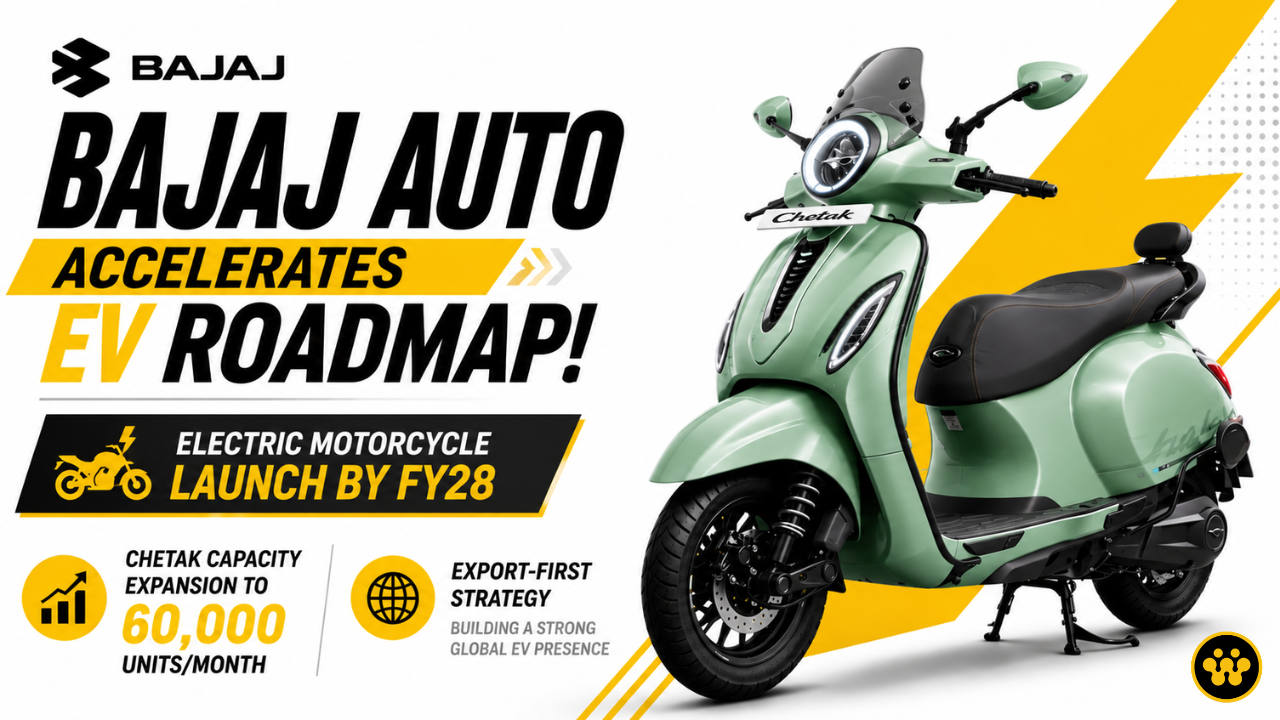
Bajaj Auto is charging ahead in the EV race. Learn about their plans to launch a mass market electric motorcycle by FY28, their export first strategy, and why they are boosting Chetak scooter production capacity to 60,000 units per month.
Entering the Electric Motorcycle Arena by FY28
Bajaj Auto has officially confirmed that development is well underway for its highly anticipated entry into the electric motorcycle segment. During a recent post earnings media interaction, Chief Financial Officer Dinesh Thapar revealed that the company is targeting a fiscal 2028 (FY28) launch, provided that development milestones proceed as planned.
Interestingly, Bajaj is adopting a highly strategic approach to this vehicle's rollout:
-
Export-First Focus: The initial priority for the new electric motorcycle will be international export markets before it is introduced to the domestic market in India.
-
Global Footprint: This export-first strategy aims to leverage the manufacturer's established global distribution network. Markets like Latin America and Africa have already emerged as key growth hubs for the brand's international export volumes, and prioritising exports will help the company strengthen its global EV presence.
-
Policy Pressures: The decision to accelerate the electric motorcycle roadmap comes against the backdrop of the Delhi EV policy 2.0, which plans to ban the registration of all new petrol and CNG two-wheelers from April 1, 2028.
Ramping Up the Chetak: Riding the EV Demand Surge
While the electric motorcycle represents an exciting future frontier, Bajaj's current EV star, the Chetak scooter, is experiencing unprecedented momentum. The company reported record volumes for the Chetak, approaching 130,000 units in the first quarter of FY27.
To capitalize on demand that continues to outpace supply, Bajaj is executing a swift manufacturing expansion:
-
Immediate Capacity Boost: Production capacity for the Chetak electric scooter is being scaled up from 50,000 units to 60,000 units per month over the immediate, near term.
-
EBITDA Milestones: Adding to the company's confidence, the electric scooter business successfully turned EBITDA positive for the quarter ended June 30, 2026, having reached breakeven just a couple of quarters ago.
-
Three-Wheeler Dominance: Additionally, the company aims to expand its electric three-wheeler capacity by another 50% in the coming months to cater to accelerating adoption rates.
A Broader Vision for Growth
Bajaj Auto's operational successes in the EV space are acting as a powerful springboard for overall corporate growth. The manufacturer’s entire electric business, encompassing both two-wheelers and three-wheelers, is now delivering robust, double-digit EBITDA margins.
To support surging demand across its complete vehicle portfolio (including commercial vehicles, EVs, and internal combustion motorcycles), the automaker has outlined a two phase capacity expansion plan:
-
Total Capacity Increase: Bajaj plans to raise its overall manufacturing capacity by roughly 20% through a two phase expansion programme.
-
Phased Approach: The first phase will add approximately 10% capacity over the next three to four months. This will be followed by another 10% capacity boost by the end of the financial year or early in the following fiscal year.
Frequently Asked Questions
Q.1When will Bajaj launch its electric motorcycle?
Q.2Why is Bajaj focusing on exports first for the electric bike?
Q.3What is the current production capacity for the Bajaj Chetak?
Q.4How many electric scooters is Bajaj actually selling?
Q.5What are the battery range and price options for the Chetak?
Looking to buy an EV?
Compare, explore and find the perfect electric vehicle for you.
Explore EVs