Maharashtra Orders 100% EV Fleets for Ola, Uber, and Rapido Bike Taxis by July 2027: Deadlines, Specs & Impact


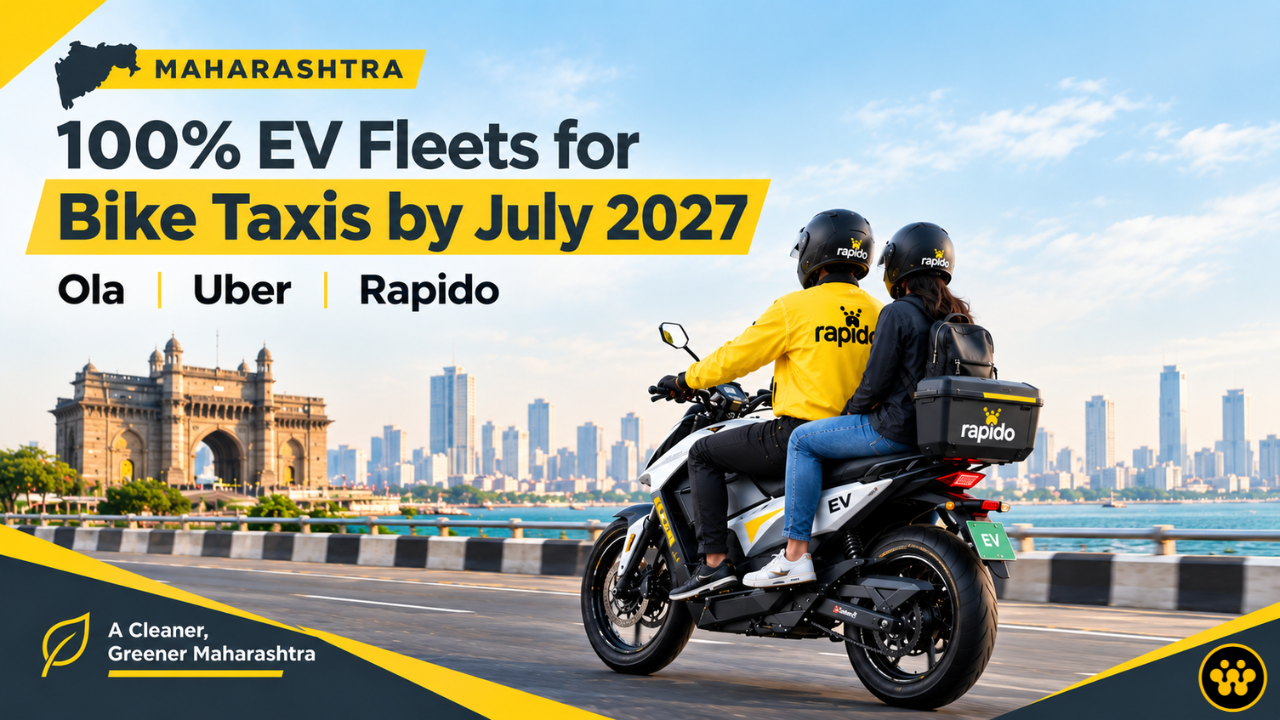
Aggregators operating bike-taxi services in Maharashtra, including market leaders Ola, Uber, and Rapido, must completely transition their fleets to electric vehicles (EVs) by July 2027, according to a directive issued by the Maharashtra State Transport Department.
The directive outlines a nine-month phased transition window aimed at eliminating petrol-powered motorcycles from app-based ride-hailing platforms across the state.
Key Highlights of the EV Mandate
- Deadline: July 2027 for a 100% electric bike-taxi ecosystem.
- Aggregators Covered: Ola, Uber, Rapido, and any newly licensed bike-taxi operators.
- Transition Plan:
- First Phase (6 Months): Existing operators must begin phasing out Internal Combustion Engine (ICE/petrol) motorcycles and onboarding electric two-wheelers.
- Extension (3 Months): Companies applying for provisional or temporary licenses under the Maharashtra Bike Taxi Rules receive an additional three-month grace window to complete the transition.
- Policy Decision: State Transport Minister Pratap Sarnaik confirmed that the cabinet rejected a proposed 50:50 hybrid model (half petrol, half electric) to prevent aggregators from delaying full EV adoption.
Why the Push for All-Electric Bike Taxis?
Bike taxis offer affordable first-and-last-mile urban connectivity, but the rapid increase in commercial petrol two-wheelers contributes significantly to tailpipe emissions and urban congestion.
By mandating zero-emission vehicles for commercial fleets, the state government aims to lower urban carbon emissions while capitalizing on the lower per-kilometer running costs of electric two-wheelers compared to petrol counterparts.
Industry & Rider Impact
The policy presents operational and financial considerations for the gig economy:
- Impact on Gig Workers: Most bike-taxi drivers operate as independent contractors using personally owned or financed motorcycles. Transitioning to 100% electric fleets requires drivers to acquire electric two-wheelers or opt into fleet-leasing models.
- Charging Infrastructure: Success will rely on expanding battery-swapping networks and fast-charging stations across major transit hubs like Mumbai, Pune, and Nagpur.
- Platform Adaptation: Aggregators will need to adjust onboard algorithms, battery monitoring, and driver incentive structures to support electric two-wheeler ranges.
Frequently Asked Questions
Q.1What is the deadline for bike taxis to turn fully electric in Maharashtra?
Q.2Which ride-hailing aggregators are affected by this EV mandate?
Q.3Why is Maharashtra mandating 100% EV fleets for bike taxis?
Q.4What specifications are required for electric two-wheelers used as bike taxis?
Looking to buy an EV?
Compare, explore and find the perfect electric vehicle for you.
Explore EVs