Hyundai Ioniq P: South Korean Auto Giant Prepares Entry-Level Electric SUV for India


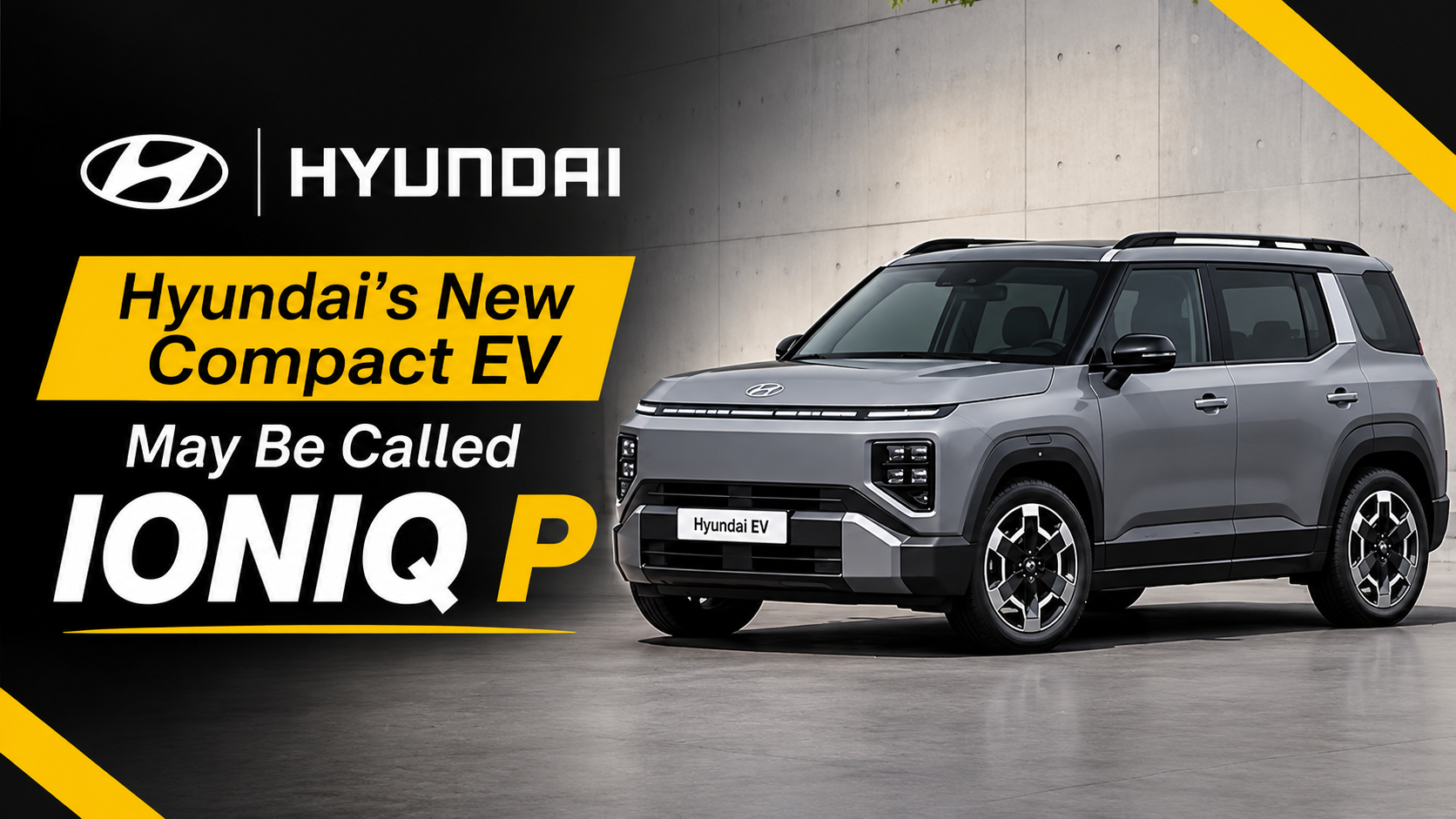
Hyundai Motor Company is preparing to expand its zero-emission footprint in India by taking its global EV branding down to the mass-market segment. The upcoming sub-4-meter electric SUV—internally codenamed HE1i—is widely expected to be christened the Hyundai Ioniq P.
This vehicle represents a strategic shift for the automaker in the Indian market. While premium offerings like the Ioniq 5 established technical capability, the upcoming compact EV aims directly at driving high-volume adoption across tier-1 and tier-2 cities.
1. Nomenclature & Strategic Positioning
The decision to adopt the "Ioniq P" badge brings Hyundai's flagship electric sub-brand into a more accessible price point. Traditionally reserved for global electric vehicles built on dedicated EV architectures, adapting the Ioniq prefix underscores the strategic weight Hyundai places on the Indian market's growing demand for electrification.
| Parameter | Key Details |
| Internal Codename | HE1i |
| Expected Market Name | Hyundai Ioniq P |
| Segment | Sub-4-Meter Compact SUV |
| Target Launch Timeline | January 2027 |
| Manufacturing Hub | Sriperumbudur Plant, Tamil Nadu |
By positioning the Ioniq P underneath the Creta EV, Hyundai is building a clear progression path within its electric portfolio.
2. Platform, Battery Pack Options, and Range Expectations
Underneath its compact footprint, the Ioniq P utilizes a localized electric vehicle architecture tailored specifically to cope with diverse Indian road conditions and thermal demands.
| Battery Pack | Target Audience | Expected Range (WLTP) | Initial Cell Supplier |
| 42 kWh | Daily urban commuters | ~300 – 325 km | Svolt (Imported) |
| 49 kWh | Highway & long-distance driving | ~355 km | Svolt (Imported) |
Industry reports indicate that Hyundai will offer the vehicle with two distinct battery configurations:
- 42 kWh Battery Pack: Aimed primarily at urban commuters looking for efficient daily driving.
- 49 kWh Battery Pack: Designed for extended range requirements and highway usability.
Battery Sourcing Strategy
To meet initial production schedules, early manufacturing batches will utilize imported battery cells—reportedly from Svolt. While Hyundai had originally planned to source local battery cells through its partnership with Exide Industries, timeline adjustments mean full local battery cell assembly will be integrated at a subsequent phase of production to optimize long-term manufacturing costs.
3. Technology and Interior Features
| Feature Category | Key Equipment & Features |
| Infotainment & Software | Next-gen Pleos Connect infotainment system with OTA updates |
| Driver Assistance (ADAS) | Level 2 ADAS (Adaptive Cruise Control, Lane Keep Assist, Emergency Braking) |
| Comfort & Interior | Sunroof, push-button start/stop, rear AC vents, optimized flat floor |
| Safety & Convenience | 360-degree camera, Tyre Pressure Monitoring System (TPMS), Hill-Hold Control |
Hyundai plans to equip the Ioniq P with high-end cabin amenities and safety systems that set new standards for mass-market compact vehicles.
Confirmed Equipment Highlights
- Pleos Connect Infotainment: The EV is expected to introduce a next-generation central display running the brand's updated Pleos Connect software suite, offering expanded connected-car functions and over-the-air (OTA) update capability.
- Level 2 ADAS Suite: Safety will be highlighted by camera- and radar-based Driver Assistance Systems, delivering features such as Autonomous Emergency Braking, Lane Keep Assist, and Adaptive Cruise Control.
- Optimized Cabin Layout: Built on an electric powertrain layout, the interior promises maximized legroom, flat rear floor space, and practical storage options throughout the cabin.
4. Expected Pricing & Rivals
Local production at Hyundai’s Sriperumbudur facility in Tamil Nadu will play a critical role in keeping retail pricing competitive.
Estimated Market Pricing
While official prices will be confirmed closer to debut, preliminary trade projections estimate the ex-showroom pricing range between ₹9.79 Lakh and ₹12.99 Lakh, though higher-spec long-range variants could stretch up toward ₹17.50 Lakh depending on feature packaging.
| Model | Status | Estimated / Ex-Showroom Price |
| Hyundai Ioniq P | Upcoming (Expected Jan 2027) | ₹9.79 Lakh – ₹12.99 Lakh |
| Tata Nexon EV | Available | ₹12.49 Lakh – ₹16.29 Lakh |
| Kia Syros EV | Upcoming | ₹12.00 Lakh – ₹16.00 Lakh |
| Mahindra XUV 3XO EV | Upcoming | ₹13.99 Lakh – ₹17.49 Lakh |
Key Rivals
Upon release, the Ioniq P will enter directly into one of the most competitive spaces in the Indian automotive market. Its chief competitors include:
- Tata Nexon EV: The established market leader in the sub-4-meter electric space.
- Mahindra XUV 3XO EV: Known for high power output and spacious cabin packaging.
- Kia Syros EV: Hyundai's sister brand offering sharing platform components with a distinct design direction.
Frequently Asked Questions
Q.1What is the expected launch date of the Hyundai Ioniq P?
Q.2Where will the Hyundai Ioniq P be manufactured?
Q.3Will the Ioniq P get ADAS features?
Q.4What is the battery capacity of the upcoming Hyundai compact EV?
Looking to buy an EV?
Compare, explore and find the perfect electric vehicle for you.
Explore EVs