Haryana EV Policy 2026: 100% Road Tax Exemption on Electric Vehicles Up to Rs 30 Lakh


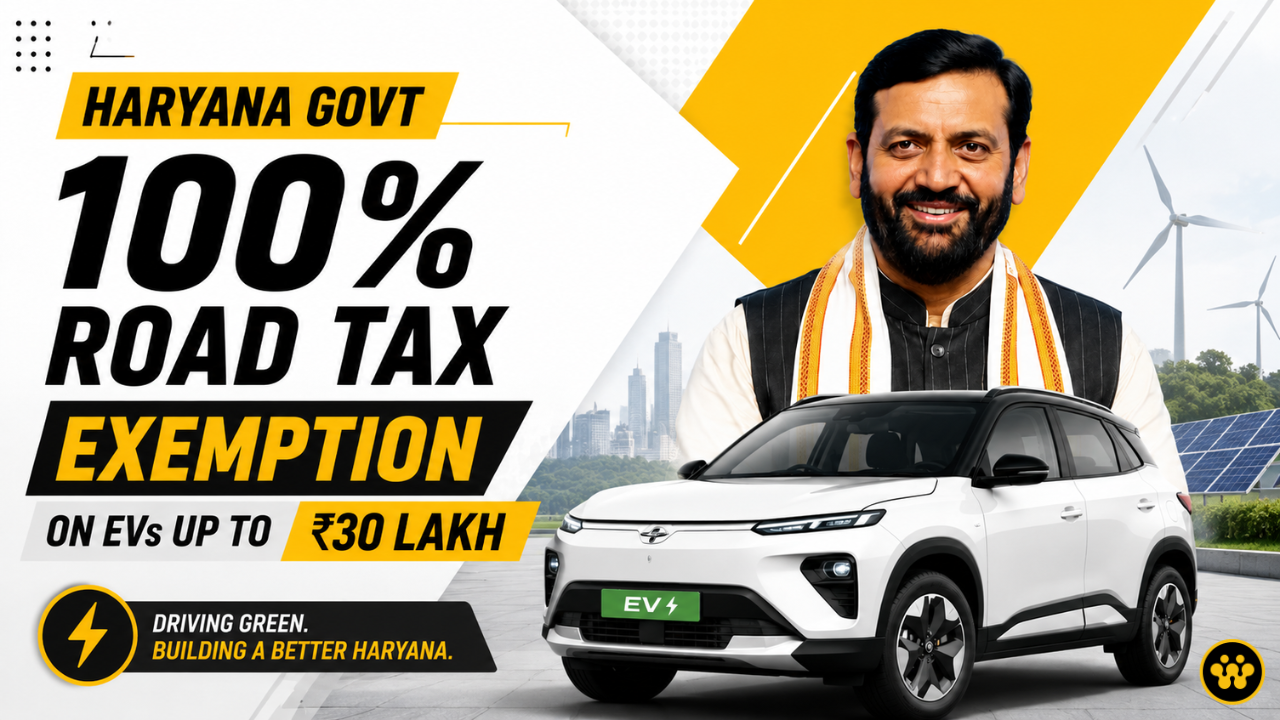
The Haryana Cabinet, led by Chief Minister Nayab Singh Saini, has officially approved a 100% exemption on motor vehicle tax for electric vehicles (EVs) priced up to Rs 30 lakh. This major policy update, which implements announcements made in the 2026-27 state budget, aims to accelerate green mobility and make EV ownership significantly more affordable for the masses.
Here is everything you need to know about Haryana's updated EV tax incentives and how they impact car buyers.
Key Highlights of the New Haryana EV Tax Exemption
The revised policy replaces the older framework, which only offered a flat 20% rebate on electric and battery-operated vehicles. The new structure offers categorized benefits:
-
Full Exemption for Mass-Market EVs: Buyers of new battery electric vehicles (BEVs) including two-wheelers, three-wheelers, and four-wheelers with an ex-showroom price of up to Rs 30 lakh will pay zero road tax upon registration.
-
Relief for Premium EVs: Electric vehicles exceeding the Rs 30 lakh ex-showroom threshold will still receive a 50% discount on their motor vehicle tax.
-
CNG Vehicle Benefits Retained: The previously existing 20% one time tax rebate for CNG vehicles remains completely unchanged.
Special Incentives for Women Buyers
In addition to pushing for green mobility, the Haryana government has introduced measures to promote female vehicle ownership.
-
The cabinet approved an additional 1% motor vehicle tax rebate on new non-transport vehicles registered in a woman's name.
-
This specific incentive applies to vehicles with an ex-showroom price of up to Rs 20 lakh.
-
This move is specifically designed to encourage financial independence and foster greater economic participation among women.
Why Did Haryana Waive the EV Road Tax?
The decision to drastically cut registration costs serves two primary purposes for the state:
-
Combating Revenue Drain: Previously, dealerships in Haryana were losing sales and the state was losing revenue because buyers preferred to register their cars in neighboring Delhi and Chandigarh, where EV registration charges were already zero.
-
Environmental Goals: The tax exemption is intended to reduce vehicular emissions, lower overall pollution levels, and significantly improve the state's air quality by driving the adoption of clean transportation.
Frequently Asked Questions
Q.1What is the new road tax rule for EVs in Haryana?
Q.2Which electric vehicles qualify for the 100% tax waiver?
Q.3How does this EV subsidy affect the actual on-road price?
Looking to buy an EV?
Compare, explore and find the perfect electric vehicle for you.
Explore EVs