EV Insurance Claims Cost 14% More Than Petrol & Diesel Cars


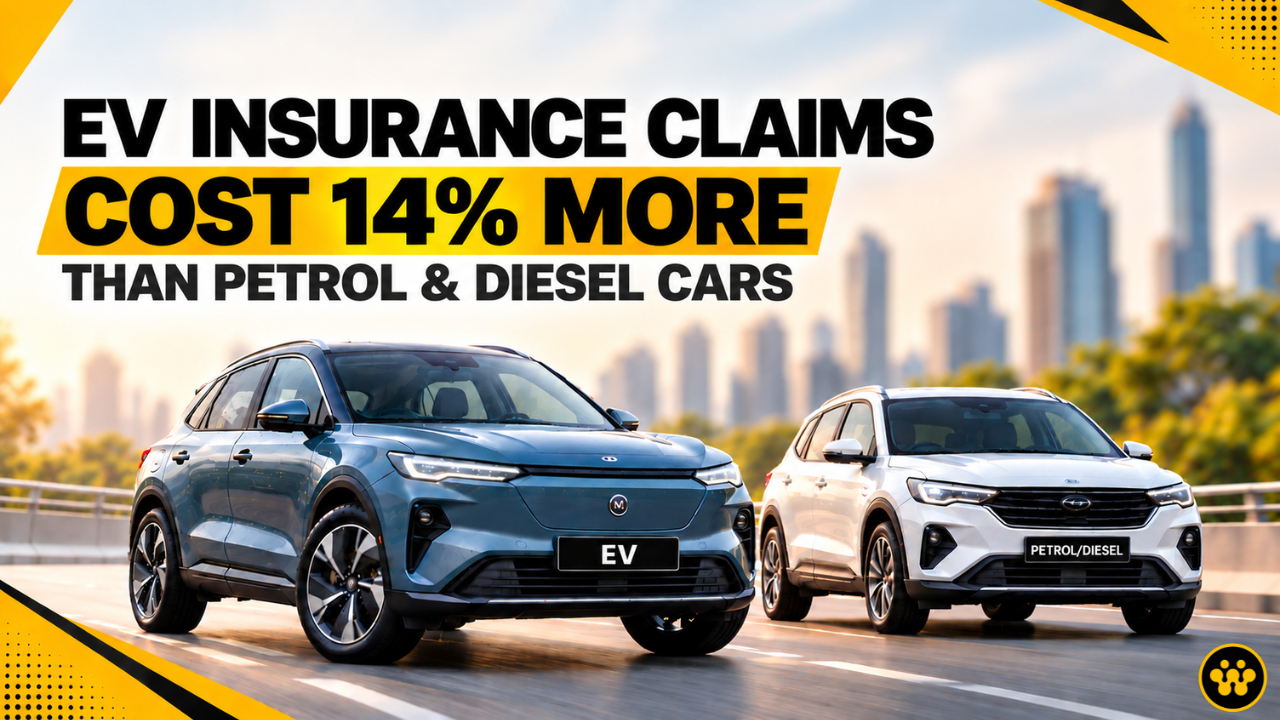
Electric vehicle (EV) insurance claims in India are significantly higher than those for traditional petrol and diesel cars. According to new claims data released by Policybazaar, electric car insurance claims cost an average of 14% more than comparable Internal Combustion Engine (ICE) vehicles in the same price range.
The report highlights distinct risk profiles, seasonal cost surges, and shifting buyer behaviors across electric car categories.
Key Highlights of the Policybazaar EV Insurance Report
- Average Claim Cost: ₹41,543 for EVs vs. ₹36,185 for ICE cars (14% difference).
- Monsoon Severity Spike: Average EV claim costs jump 25% during monsoons (rising to ~₹65,000).
- Battery Protection Demand: 70% of EV owners now opt for battery protection add-ons, up from 51%.
- Highest Risk Segment: Electric SUVs record the highest claim frequency at 31 claims per 100 vehicles.
- Top Region for Claims: East India leads with 41 claims per 100 insured EVs.
Why Are EV Insurance Claims More Expensive?
The comparison evaluated vehicles within their first three years of ownership in the ₹10 lakh to ₹15 lakh price segment (excluding extreme large-loss claims).
Policybazaar attributes the higher claim severity in EVs to three main factors:
- High Replacement Cost of Batteries: The battery pack alone accounts for 40% to 50% of an electric car's total value.
- Specialized Electronics & Cooling Systems: Advanced infotainment modules, sensor setups, and battery thermal management systems carry steep replacement price tags.
- Import Reliance & Repair Infrastructure: Heavy reliance on imported spare parts paired with a developing network of specialized EV technicians drives repair costs up.
Monsoon Driving Pushes EV Repair Costs to ₹65,000
Weather conditions heavily impact electric vehicle repair costs. During the monsoon season, the average EV claim severity climbs by 25%—rising from ₹52,000 during normal dry months to nearly ₹65,000.
Waterlogging, street flooding, and heavy rains expose electric vehicles to underbody damage and water ingress into sensitive electrical systems and battery enclosures.
Rapid Surge in Battery Protection Add-On Covers
Because battery replacement is so costly, Indian EV owners are aggressively securing add-on insurance covers:
- Battery Protection Cover: Adoption jumped from 51% to 70% over a six-month period.
- Multiple Add-Ons: 80% of EV owners purchase at least two key add-ons (such as Zero Depreciation, Battery Protection, Roadside Assistance, and Consumables cover)—compared to 77% of diesel car owners and 75% of petrol car owners.
EV Claim Frequency: Breakdown by Body Style & Region
1. By Vehicle Body Style
- SUVs (31 claims per 100 EVs): Highest claim frequency. SUVs face higher exposure to rough terrain, underbody scrapes, and suspension/tyre wear.
- Hatchbacks (28 claims per 100 EVs): Frequently exposed to city traffic, tight parking spaces, and minor fender benders.
- Sedans (26 claims per 100 EVs): Lowest claim rate among the three categories.
2. By Geographic Region & City Tier
- East India: Highest claim frequency overall at 41 claims per 100 EVs (52% higher than South India).
- North India: 34 claims per 100 EVs.
- West India: 32 claims per 100 EVs.
- Northeast India: 30 claims per 100 EVs.
- South India: 27 claims per 100 EVs.
- City Tiers: Tier-II cities recorded higher claim rates (33 per 100 EVs) than Tier-I metro cities (30) and Tier-III markets (27).
Industry Perspective
Commenting on the findings, Paras Pasricha, Head of Motor Insurance at Policybazaar, stated that electric vehicles exhibit a distinctly different risk profile compared to conventional petrol and diesel vehicles, driven by higher average repair severity, increased demand for specialized add-ons, and varying regional claim frequencies.
Frequently Asked Questions
Q.1How much more do EV insurance claims cost compared to petrol and diesel cars?
Q.2How does monsoon season affect EV insurance claims?
Q.3What is a Battery Protection Cover, and why is its demand rising?
Q.4Which type of EV has the highest insurance claim frequency?
Q.5Which region in India records the highest number of EV insurance claims?
Looking to buy an EV?
Compare, explore and find the perfect electric vehicle for you.
Explore EVs