Delhi EV Policy 2026 Records Zero Electric Auto-Rickshaw Subsidy Applications Ahead of January 2027 Cutoff


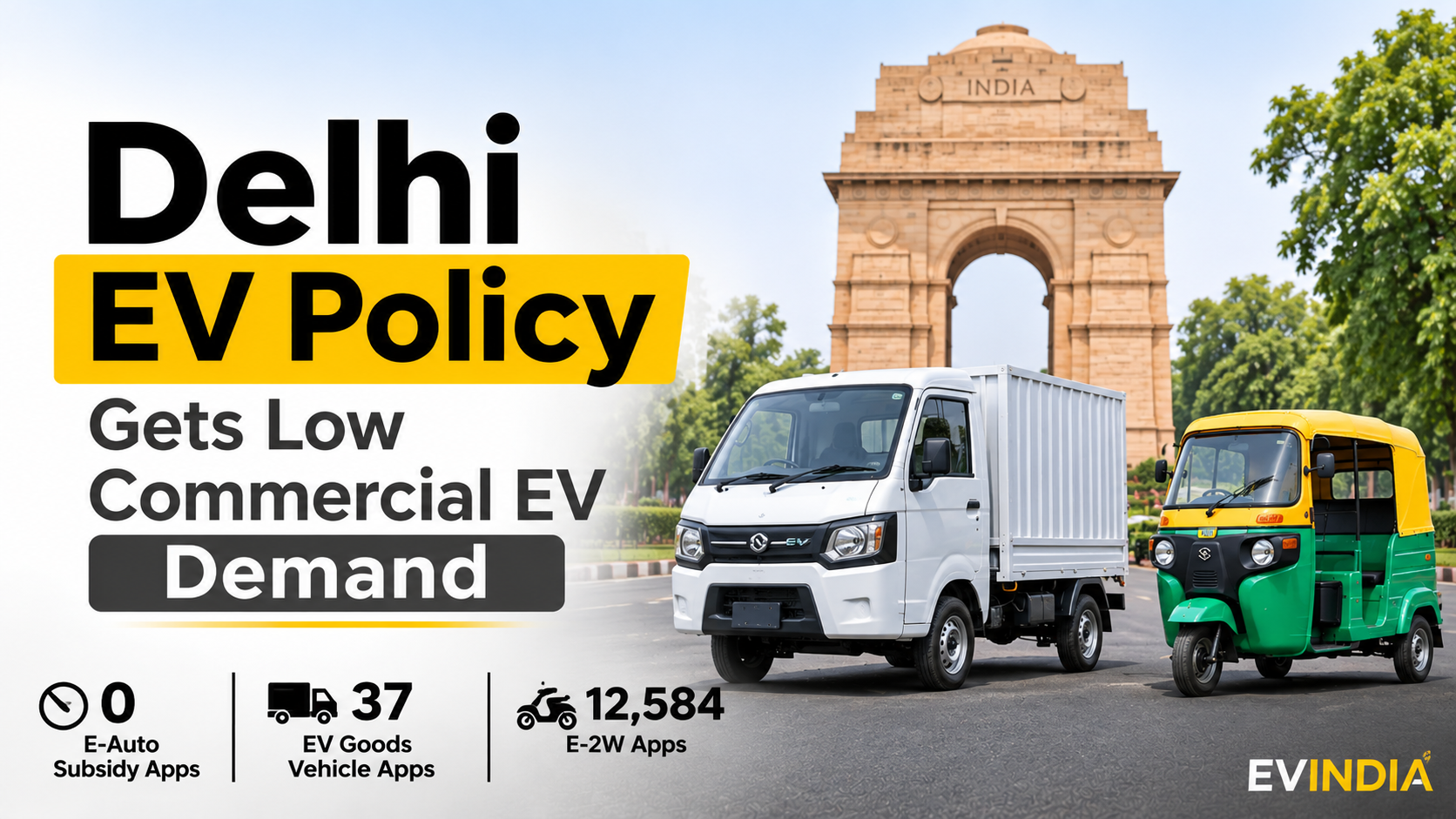
When the Delhi government rolled out the Delhi Electric Vehicle Policy 2026 on July 1, 2026, policymakers structured the framework with front-loaded financial incentives to trigger rapid fleet replacement. Five months into implementation, however, official data shows a dramatic split between personal commuters and commercial fleet operators.
While private electric two-wheeler buyers have claimed 12,584 purchase subsidies, not a single applicant has come forward for the ₹50,000 electric auto-rickshaw purchase subsidy. The light commercial freight segment fares little better, recording just 37 purchase subsidy applications despite a Year-1 incentive of up to ₹1,00,000.
The disconnect is even sharper in the state’s vehicle scrappage initiative. Through November 2026, zero owners have claimed the ₹25,000 scrappage bonus for retiring a conventional-fuel three-wheeler, and only one operator has applied for the ₹50,000 goods vehicle scrappage payout. With mandatory electric-only registration rules for new L5 three-wheelers taking effect on January 1, 2027, the numbers point to an imminent implementation crunch.
Policy Scorecard: Personal Two-Wheelers vs. Commercial Fleets
Notified on June 30, 2026, and active through March 31, 2030, the policy combines direct purchase subsidies, scrappage bonuses, and a 100% exemption on road tax and registration fees. Yet ground-level uptake varies sharply across vehicle categories:
| Segment | Year-1 Purchase Incentive | Purchase Applications | Scrappage Payout | Scrappage Applications | Electric-Only Cutoff |
| Electric Auto-Rickshaws (L5M) | ₹50,000 (drops to ₹40k in Yr 2, ₹30k in Yr 3) | 0 | ₹25,000 | 0 | January 1, 2027 |
| Electric Goods Carriers (N1) | Up to ₹1,00,000 | 37 | ₹50,000 | 1 | January 1, 2027 |
| Electric Two-Wheelers | ₹10,000/kWh (up to ₹30,000) | 12,584 | ₹10,000 | 237 | April 1, 2028 |
For two-wheelers priced up to ₹2.25 lakh ex-factory, the combination of central schemes and state incentives has lowered upfront prices enough to sustain steady retail demand. For commercial operators, however, purchase decisions hinge on daily operating margins rather than sticker discounts.
Inside the Commercial Slowdown: Five Ground-Level Barriers
Interviews with transport unions, fleet associations, and industry stakeholders reveal that the commercial hesitation stems from five practical bottlenecks rather than a lack of awareness:
1. Portal Glitches and Missing Eligible Models
A critical administrative hurdle lies on the state’s digital disbursement platform. Several N1 electric goods vehicles already certified under central EV schemes are still missing from the Delhi EV Policy portal, preventing buyers and dealers from submitting claims. Furthermore, N1 light commercial vehicles must meet strict domestic localisation benchmarks—requiring key components to be manufactured or assembled in India—narrowing the pool of eligible models.
2. The CNG Turnaround Advantage
For auto-rickshaw drivers and small cargo operators, time spent off the road translates directly into lost daily wages. Refueling a CNG auto-rickshaw takes 5 to 10 minutes, whereas charging an electric three-wheeler requires extended downtime. Without widespread high-speed charging or rapid battery-swapping hubs near major transit stands, drivers view electric operations as a threat to daily shift earnings.
3. Upfront Price Gap and Financing Friction
According to Rajender Soni, general secretary of the Delhi Auto Rickshaw Sangh, the ₹50,000 purchase subsidy fails to offset the higher acquisition and maintenance costs of electric three-wheelers. Union representatives have urged the administration to raise the e-auto subsidy to at least ₹1.5 lakh, noting that high commercial interest rates and steep down payments deter individual owner-drivers from making the switch.
4. Secondary Market Resale Beats Scrappage Bonuses
The scrappage scheme’s near-zero uptake—zero three-wheelers and one goods vehicle—reflects simple resale economics. Shyam Sundar, general secretary of the Delhi NCR Transport Ekta Manch, points out that operators can fetch significantly higher prices selling older vehicles in the open secondary market than claiming the ₹25,000 to ₹50,000 scrappage bonus. Coupled with paperwork around Registered Vehicle Scrapping Facilities (RVSFs), most owners prefer reselling legacy vehicles outside Delhi rather than scrapping them.
5. Cross-Border Delhi-NCR Charging Anxiety
While Delhi has accelerated local charger installations through Delhi Transco Limited (DTL) and single-window clearances, N1 light goods carriers routinely haul freight across inter-state Delhi-NCR corridors into Noida, Gurugram, Faridabad, and Ghaziabad. Sparse fast-charging reliability outside city boundaries continues to discourage small logistics operators from retiring diesel or CNG cargo vans.
What Happens When January 1, 2027 Arrives?
Unlike earlier incentive-only policies, the Delhi EV Policy 2026 uses hard regulatory deadlines to force emission reductions in high-utilization transport segments. From January 1, 2027, new internal combustion and CNG L5 three-wheelers will no longer be eligible for registration in Delhi, followed by an electric-only mandate for new two-wheelers on April 1, 2028.
With zero electric auto-rickshaw subsidy applications logged ahead of the cutoff, the Transport Department faces immediate pressure to fix portal model listings, streamline commercial financing, and expand dedicated fleet charging zones. Without rapid course correction, Delhi’s last-mile passenger and urban freight networks risk sharp registration bottlenecks once the new rules take effect in January 2027.
Frequently Asked Questions
Q.1Why have zero electric auto-rickshaw subsidies been claimed under Delhi EV Policy 2026?
Q.2Which vehicles face a mandatory EV-only registration cutoff on January 1, 2027 in Delhi?
Q.3Why are electric goods carrier subsidy applications low in Delhi?
Q.4How much scrappage bonus does Delhi offer for commercial vehicles in 2026?
Looking to buy an EV?
Compare, explore and find the perfect electric vehicle for you.
Explore EVs