Used EV Buyer’s Guide (2026): How to Inspect Cars, Bikes & Scooters


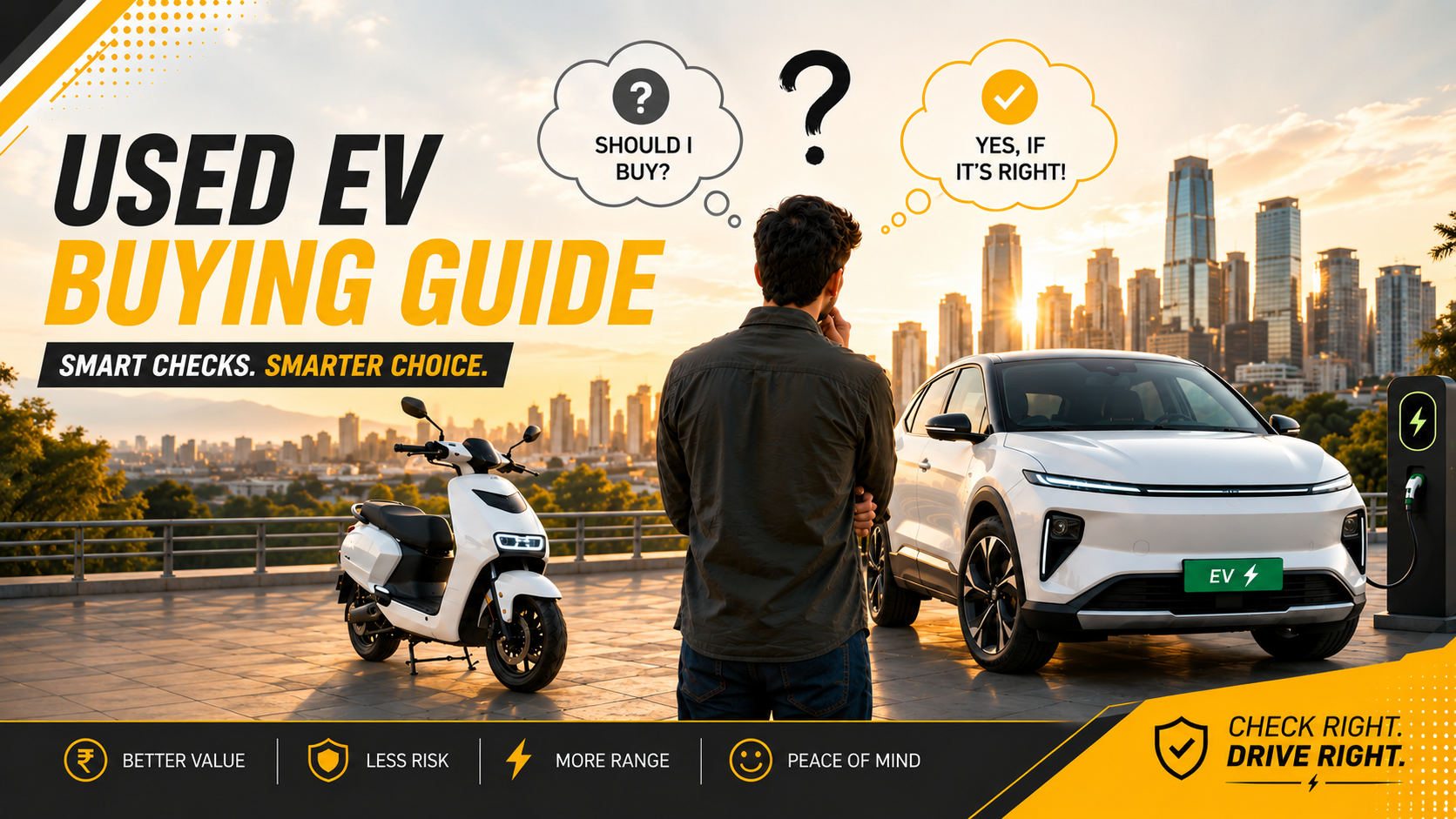
Buying a second-hand electric vehicle (EV)—whether it’s a car, motorcycle, or scooter—is one of the smartest ways to skip initial depreciation hits. Electric mobility is expanding rapidly, creating massive value on the pre-owned market.
However, evaluating a pre-owned EV requires a completely different inspection strategy than checking a traditional gas or petrol vehicle. You don't need to worry about spark plugs, oil leaks, clutch plates, or engine block wear. Instead, your main focus shifts to high-voltage battery degradation, charging standards, hardware health, and connected software features.
This comprehensive buyer's guide covers everything you need to check before buying a used electric car, electric bike, or electric scooter.
1. Battery State of Health (SOH) & Degradation Checks
The traction battery pack is the single most expensive component in any electric vehicle, accounting for 30% to 50% of the vehicle's total value. Over time, all lithium-ion chemistries suffer chemical degradation, reducing total range.
Before making an offer on any pre-owned EV, you must get an accurate State of Health (SOH) reading.
How to Test SOH Across Different EVs
- Electric Cars: Plug a Bluetooth OBD-II scanner into the diagnostic port to view real-time cell voltage balance using mobile apps (such as LeafSpy or Scan My Tesla), or request an official dealer diagnostic printout.
- Electric Bikes & Scooters: Premium connected 2-wheelers allow you to check SOH directly through their companion smartphone apps or on-screen diagnostic menus. For non-app scooters, take the vehicle to an authorized service center to pull the BMS (Battery Management System) health percentage.
- Real-World Range Test: Charge the EV to 100%. Turn off high-drain accessories (like air conditioning on cars or performance modes on bikes) and compare the dashboard's estimated range against the original factory rating. A healthy 3-year-old EV should retain 85% to 90%+ SOH.
2. Confirming Transferable Battery & Vehicle Warranties
Factory warranty protection provides a critical safety net when buying pre-owned electric mobility.
Critical Warranty Verification Steps
- Electric Cars: Standard coverage spans 8 years / 1,60,000 km (or regional equivalent), guaranteeing 70% retained battery capacity.
- Electric Bikes & Scooters: Manufacturer warranties usually cover 3 to 5 years (or 30,000–50,000 km). Confirm if the extended warranty is transferable to a second owner.
- Check the In-Service Date: The warranty clock starts on the exact day the EV was delivered to its original buyer, not the manufacturing year.
- Inspect Title & Mod History: Salvage titles, unapproved aftermarket wiring modifications, or local battery pack swaps instantly void factory warranties.
3. Charging Ports, Hardware & Adapters
Charging standards vary depending on whether you are looking at a 4-wheeler or a 2-wheeler.
Charging Infrastructure Considerations
- EV Cars (CCS vs. NACS): Confirm whether the car uses CCS1/CCS2 or the newer NACS plug standard. Check if the seller includes necessary DC fast-charging adapters.
- EV Bikes & Scooters (Portable Chargers): Ensure the sale includes the original OEM portable home charger (usually a standard 15A/16A or 6A wall-plug setup). Replacing a manufacturer’s smart charger out-of-pocket can be surprisingly expensive.
- Inspect the Charge Port: Look closely inside the charging socket for bent pins, melted plastic, thermal discoloration, or broken latching mechanisms.
4. Mechanical & Physical Wear Red Flags
Electric vehicles produce instant torque and are significantly heavier due to their battery packs. This combination creates distinct wear patterns across cars, bikes, and scooters.
Wear Items to Inspect Before Buying
- Brake Rotor Rust & Brake Shoes: Because EVs rely on regenerative braking to slow down, physical hydraulic brakes get far less use. Inspect car rotors for heavy rust pitting or seized calipers. On e-scooters and e-bikes, check for squealing drum brakes or sticking brake levers.
- Tire Tread & Suspension Wear: Instant electric torque wears out tires 20% to 30% faster than on gas vehicles. Check for uneven shoulder wear, which indicates worn suspension bushes sagging under heavy battery weight.
- Auxiliary 12V / Low-Voltage Battery: Cars and large electric motorcycles still rely on a small auxiliary battery to boot up computer contactors. If this low-voltage battery dies, the EV won't start even if the main high-voltage pack is 100% full. Replace it if it's over 3 years old.
5. Registration (RC), Vehicle Verification & Paperwork
Before completing a transaction for any second-hand EV 4-wheeler or 2-wheeler, you must thoroughly audit all legal documentation to avoid future liability issues.
Essential Legal Checklist
- RTO : Run the vehicle's registration number through official government vehicle portals (such as Parivahan/Vahan). Confirm that the owner's name matches the seller's identification, and check for any outstanding traffic challans or unpaid fines.
- Bank Loan NOC (No Objection Certificate): If the previous owner financed the EV, ensure they provide an official Bank NOC along with Form 35 to clear hypothecation records before transferring ownership.
- Insurance Transfer & Battery Coverage: Verify whether the existing comprehensive insurance policy covers high-voltage battery damage, electrical fire risks, and charger theft. Transfer the policy to your name immediately following ownership transfer.
6. Software Updates & App Ownership Transfer
Modern electric vehicles are software-driven machines.
Digital & Connected Diagnostics
- App & Ownership Transfer: Confirm that the current owner can unpair their account and transfer app access (for remote lock/unlock, telemetry, and navigation) directly to you.
- Over-the-Air (OTA) Updates: Ensure the vehicle's central console shows no pending software error codes or stalled update loops.
Pre-Purchase Inspection (PPI) Summary Checklist
Frequently Asked Questions
Q.1Does an EV battery warranty transfer to the second owner?
Q.2Are high-mileage used EVs safe to buy?
Q.3What charging accessories should be included when buying a used EV?
Looking to buy an EV?
Compare, explore and find the perfect electric vehicle for you.
Explore EVs