Ola Electric Announces Workforce Cuts Amid Shift to Automation and "Hyperservice" Success


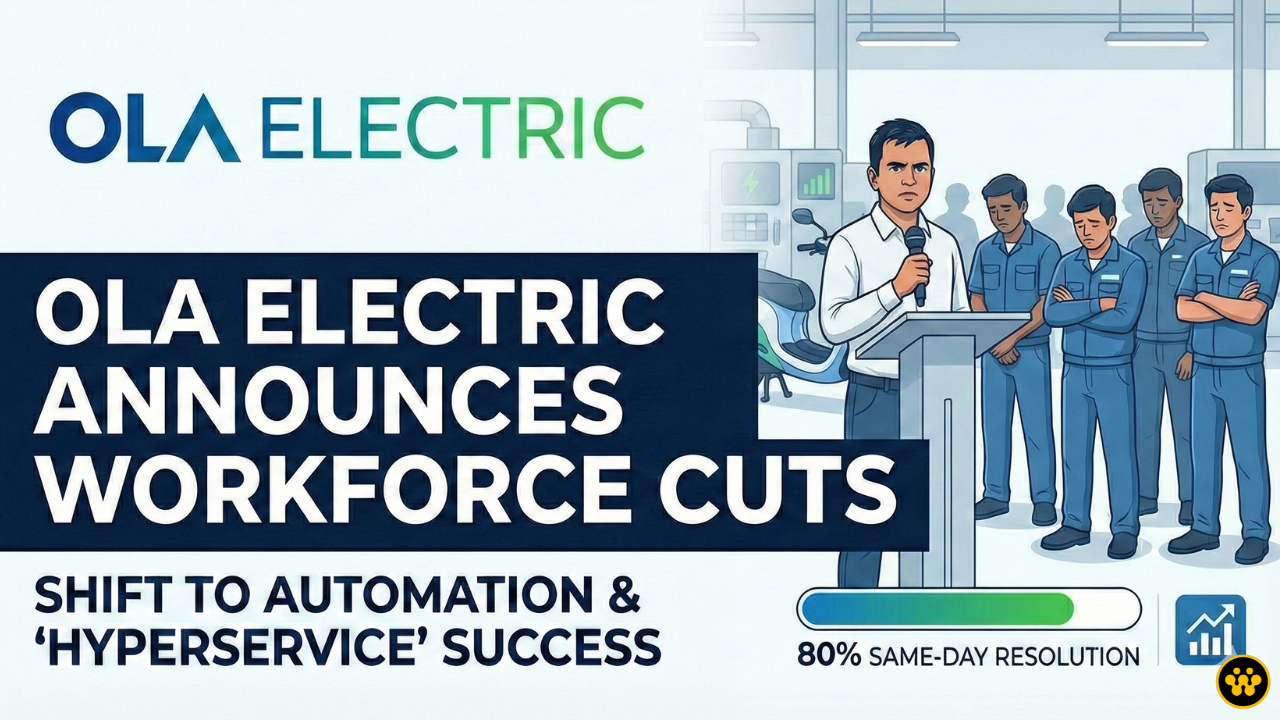
India’s electric two-wheeler leader, Ola Electric, has announced a significant structural transformation aimed at streamlining operations and achieving long-term profitability. As part of this "execution reset," the company confirmed it will reduce its workforce by approximately 5%, while simultaneously doubling down on AI-driven automation and its high-performing Hyperservice initiative.
Service Turnaround: 80% Same-Day Resolution
The cornerstone of Ola’s recent business turnaround is the Hyperservice program. After facing intense scrutiny over service delays in 2024 and 2025, the company claims to have hit a major milestone: 80% of service requests nationwide are now resolved on the same day. This service-led strategy appears to be paying off. Recent VAHAN data shows Ola Electric reclaiming market share, climbing to nearly 12% in late December 2025, as the company works to win back customer trust through faster repairs and a more transparent digital workflow.
Efficiency Through Automation
The 5% workforce reduction expected to impact several hundred employees is being framed as a move toward a "leaner organization." Ola Electric is aggressively replacing manual front-end operations with increased automation to improve speed and discipline.
"We remain focused on delivering a stronger customer experience and building a leaner organisation positioned for long-term, profitable growth," the company stated.
Market Context: The Race for Profitability
This restructuring comes at a critical time for the EV giant. After a challenging 2025 where legacy players like TVS and Bajaj Auto closed the gap in market share, Ola is pivoting from "growth at all costs" to "sustainable profitability." By automating redundant roles and optimizing its service backbone, the company aims to reduce its burn rate and meet its EBITDA break-even targets.
For the Indian EV industry, Ola’s move signals a broader trend the shift from the "startup phase" to "operational excellence." As competition intensifies, the winner won't just be the one who sells the most scooters, but the one who can service them most efficiently.
Looking to buy an EV?
Compare, explore and find the perfect electric vehicle for you.
Explore EVs