Indian EV 2 Wheeler Sales Report April 2026: TVS Takes the Lead as Market Corrects Post Subsidy


The Indian electric two wheeler (E2W) industry witnessed a significant shift in dynamics this April 2026. Following a record breaking March that saw nearly 1.92 lakh registrations due to the "subsidy rush," the market has entered a phase of normalization. While overall industry volumes saw a 22% month-on-month (MoM) decline, certain brands have shown remarkable resilience in the face of the PM E-DRIVE subsidy transition.
April 2026 E2W Sales Leaderboard
The following data represents the registration figures for the top manufacturers in India for April 2026:
|
Brand |
April 2026 Sales (Units) |
Market Standing |
|
37,827 |
Market Leader | |
|
32,883 |
Runner-up | |
|
27,024 |
3rd Place | |
|
15,230 |
4th Place | |
|
12,166 |
5th Place | |
|
6,884 |
6th Place |
Brand Performance Analysis: Strategic Wins and Market Shifts
TVS Motor Company: The New Industry Benchmark
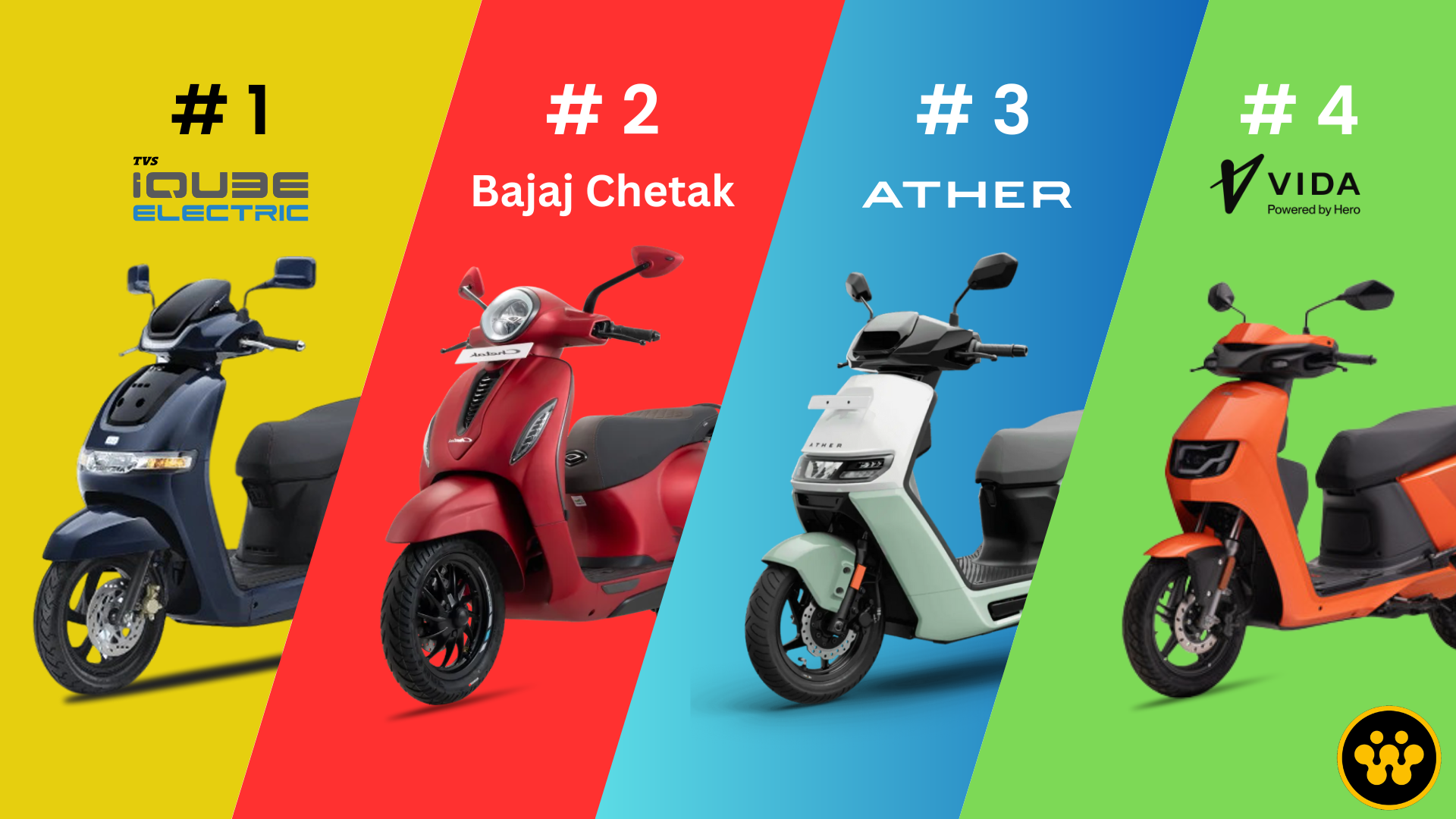
With 37,827 units, TVS has solidified its position at the top of the charts. The brand’s success is largely attributed to its robust service network and the consistent performance of the iQube series. By maintaining a dominant 25% market share even after the subsidy expiration, TVS has proven that "Legacy Trust" remains a primary driver for Indian EV buyers.
Bajaj Chetak: Solid Metal, Solid Growth
Bajaj Auto continues to close the gap with TVS, clocking 32,883 units. The Chetak’s "solid metal body" marketing and the introduction of more affordable variants have successfully converted traditional ICE (petrol) users. Their steady performance suggests that Bajaj is a serious contender for the #1 spot in the coming fiscal year.
Ather Energy: Premium Resilience
Ather Energy recorded 27,024 units, holding onto its podium finish. While the brand saw a dip from its March peak of ~36,000 units, the launch of the family oriented Ather Rizta and the expansion of the "Ather Grid" charging network have helped maintain high levels of consumer interest in the premium segment.
Hero Vida: Dominating the Value Segment
Hero MotoCorp’s EV brand, Vida, recorded 15,230 units, outperforming several tech heavy startups. Their focus on removable battery technology and reliable after sales support has made them a go to choice for urban commuters who prioritize practicality over high speed performance.
Ola Electric: The Only Brand with Positive Growth
In a surprising turn of events, Ola Electric was the only major OEM to record positive growth in April. Registrations rose to 12,166 units, a 20% increase from their March figures (~10,133 units). This growth is largely credited to the commercialization of their 4680 Bharat Cells, which has allowed the company to pass on cost efficiencies to customers even after the subsidy exit.
Ampere (Greaves Electric): Holding Steady
Ampere recorded 6,884 units, representing a vital mid tier segment. As the market consolidates, Ampere’s focus on the Nexus series and deeper penetration into rural markets will be key to their long term growth strategy.
The Road Ahead: Will May 2026 See a Sales Recovery?
The dip in April 2026 sales compared to March was a logical consequence of the PM E-DRIVE subsidy deadline on March 31. This created a "pull-forward" effect where buyers rushed to finalize purchases in March to save on costs. Looking ahead to May 2026, there is a strong possibility of a gradual recovery. While we may not immediately hit the 2 lakh mark, several factors point toward an upward trend: the introduction of introductory pricing for new launches like the Oben Rorr Evo, the extension of some state-level incentives, and the normalization of battery prices through localized cell manufacturing. If manufacturers continue to absorb price hikes through internal efficiencies, May could mark the start of a sustainable growth phase for the remainder of the year.
Looking to buy an EV?
Compare, explore and find the perfect electric vehicle for you.
Explore EVs