Tata Motors Confident on 30% EV Penetration by 2030; Sees Subsidy Dependence Declining


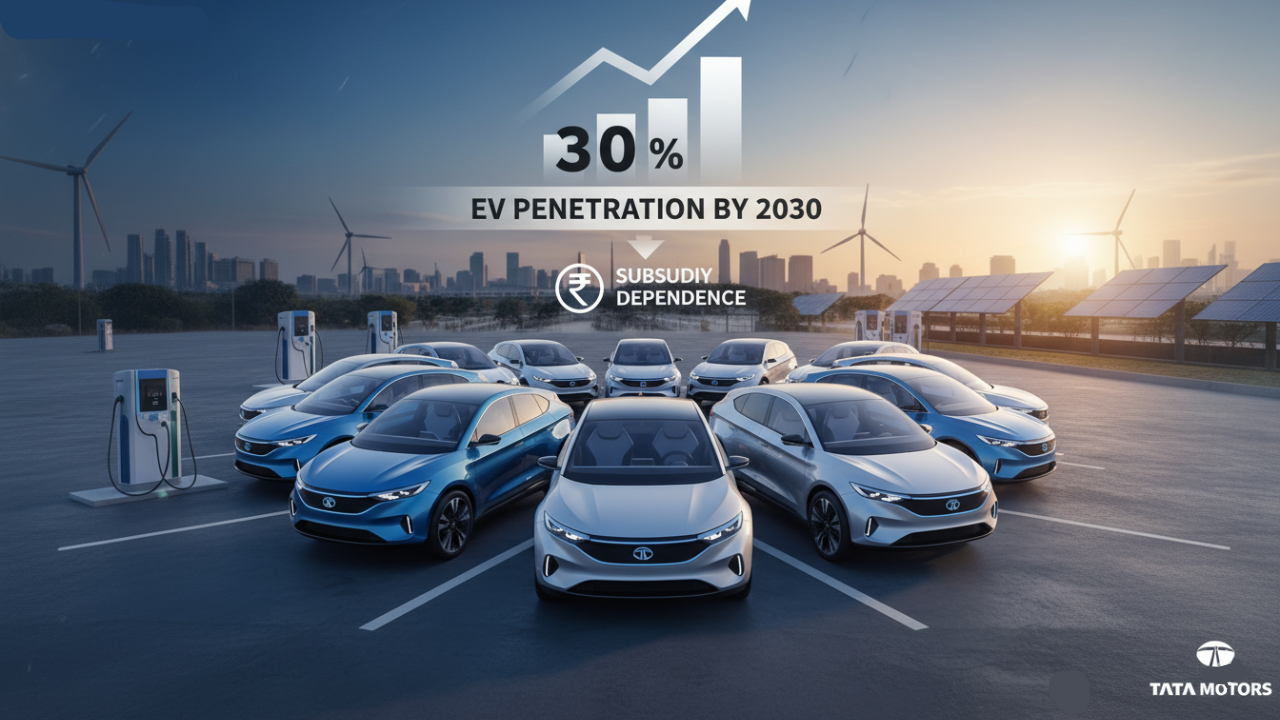
India's leading automotive manufacturer, Tata Motors, has announced a bold target for its electric vehicle (EV) division, projecting that 30% of its total sales will come from EVs by the year 2030. In a strong signal of market confidence, the company also anticipates that the industry's reliance on government subsidies will decrease significantly as the e-mobility ecosystem matures.
Tata's Ambitious 2030 EV Roadmap
As the current market leader in India's passenger EV space, Tata Motors is doubling down on its electric strategy. This 30% penetration goal is a cornerstone of its long-term vision, building on the success of popular models like the Tata Nexon EV and Punch EV. This commitment is set to accelerate the development of new electric models and further solidify the company's dominance in the shift towards sustainable transport.
A Market Maturing Beyond Subsidies
One of the key takeaways from the announcement is Tata's forecast for government incentives. The company believes that as the EV market grows, economies of scale, reduced battery costs, and wider consumer adoption will make electric vehicles more affordable on their own. This will lessen the need for subsidies, like the FAME (Faster Adoption and Manufacturing of Electric Vehicles) scheme, which were crucial for kick-starting India's EV journey. This signals a transition from a new, incentive-driven industry to a self-sustaining, mature market.
What This Means for India's E-Mobility Future
Tata Motors' ambitious target is a significant development for India's national climate goals. Achieving this level of EV adoption will be crucial for :
-
Reducing carbon emissions from the transport sector.
-
Decreasing India's oil import bill.
-
Spurring investment in a nationwide EV charging infrastructure.
As the industry leader, Tata's confidence is likely to encourage other manufacturers and stakeholders to increase their own investments, further accelerating India's transition to electric mobility.
The Road Ahead : Challenges and Opportunities
While the 30% goal is ambitious, achieving it will depend on overcoming existing challenges, including the rapid expansion of accessible charging stations and managing the supply chain for key components like batteries. However, Tata Motors' clear and confident strategy indicates it is prepared to lead the charge, turning these challenges into opportunities for growth in the next decade.
Looking to buy an EV?
Compare, explore and find the perfect electric vehicle for you.
Explore EVs