Ola Electric Sales Surge: Registrations Double in Q1 FY26, Signaling Strong Market Recovery


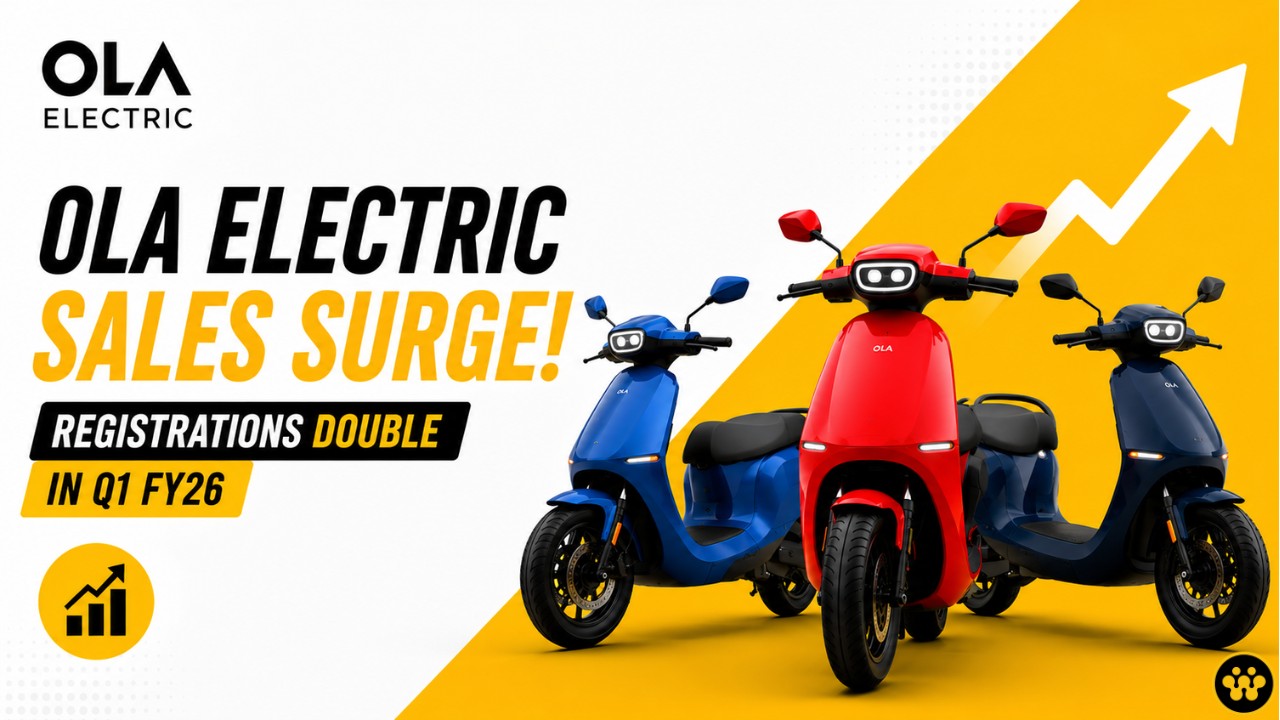
The Indian electric two-wheeler market is witnessing a major shift as Ola Electric reports a monumental jump in quarterly registrations, reinforcing its position as a key leader in the nation’s transition to sustainable mobility.
Ola Electric has officially kicked off the 2026 fiscal year with a performance that has captured the attention of the automotive industry and investors alike. According to the latest government VAHAN registration data, the company recorded 43,719 vehicle registrations in Q1 FY26. This figure represents a near doubling of its performance when compared to the 22,252 units registered in the preceding quarter (Q4 FY25), signaling a robust recovery and sustained market momentum.
A Record Breaking June Finish
The growth trajectory remained consistent throughout the quarter, building confidence across the supply chain. The standout milestone for the quarter was June 2026, which saw 16,144 registrations the company’s strongest monthly performance in recent quarters.
This consistent upward trend, observed month over month throughout the first quarter, underscores the effectiveness of the company’s recent operational overhauls. By streamlining retail execution and enhancing product availability, Ola has successfully translated latent consumer interest into tangible deliveries, a crucial factor in a competitive landscape where reliability and availability are top priorities for buyers.
Why the Market is Shifting Toward EVs
The surge in Ola Electric’s registration numbers is not happening in a vacuum. It mirrors the broader structural growth of India’s electric two-wheeler market, which is currently being driven by several macro economic and social factors:
-
Favourable Ownership Economics: As the gap in running costs between electric scooters and their internal combustion engine (ICE) counterparts widens, consumers are increasingly prioritizing the long term savings associated with EVs.
-
Rising Environmental Awareness: Sustainability is no longer a niche concern. Awareness around energy security and local air quality in major urban hubs is driving a conscious shift toward zero emission mobility.
-
Operational Maturity: Leading OEMs, including Ola Electric, are moving beyond the "early adoption" phase. With the Ola Futurefactory in Tamil Nadu operating at scale and the Battery Innovation Centre (BIC) in Bengaluru pushing the boundaries of cell chemistry, the ecosystem is reaching a level of maturity that provides buyers with the confidence to transition to electric.
Strengthening Leadership Through Innovation
"Q1 FY26 marks a significant milestone in our growth journey," an Ola Electric spokesperson noted. "The sustained momentum reflects the success of our operational improvements, a strong product portfolio, and the continued preference of our customers. We remain focused on accelerating EV adoption through technology leadership, manufacturing scale, and delivering a differentiated ownership experience."
A core pillar of this strategy is vertical integration. Unlike many competitors, Ola’s control over its entire value chain from battery cell development to its massive direct to customer retail network provides it with a unique competitive edge. By minimizing dependency on external suppliers for critical components, the company is better positioned to navigate global supply chain volatility while maintaining competitive pricing for its users.
Looking Ahead: The Future of Indian Mobility
As India aims to become a global hub for electric vehicle manufacturing, the performance of companies like Ola serves as a barometer for the industry's health. The focus is now shifting from mere volume to service quality and brand loyalty. With its "Hyperservice" program aimed at reducing service turnaround times and improving parts availability, Ola is signaling that it is ready to scale its infrastructure to support its growing user base.
Industry analysts expect this growth to continue as the festive season approaches, traditionally a period of high demand in the Indian automotive sector. For now, Ola Electric’s Q1 performance is a clear indicator that the appetite for electric mobility in India remains strong, and the company is well prepared to lead the charge.
Frequently Asked Questions
Q.1 How many vehicles did Ola Electric register in Q1 FY27?
Q.2What is the "QoQ growth" mentioned in the reports?
Q.3Why are Ola Electric's registration numbers important?
Q.4How many Ola Electric vehicles were registered in June 2026?
Q.5Why is Ola Electric seeing such high growth recently?
Looking to buy an EV?
Compare, explore and find the perfect electric vehicle for you.
Explore EVs