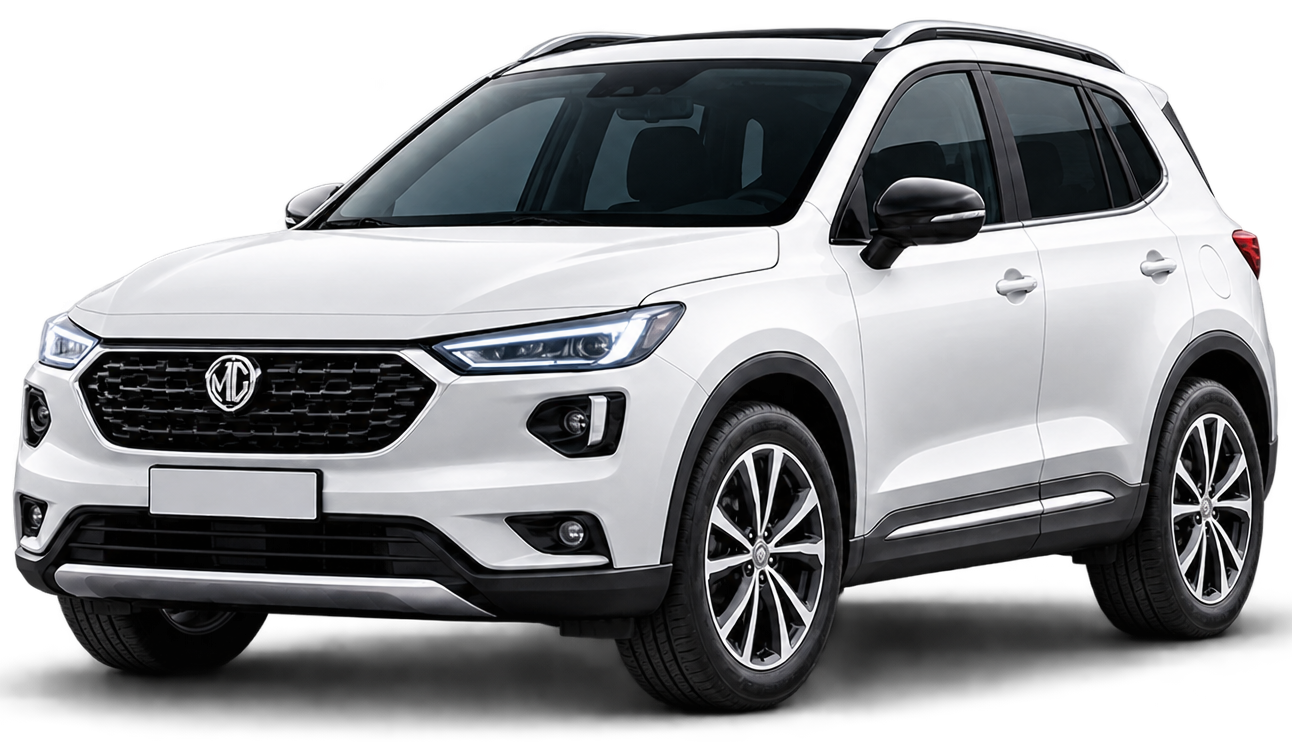
India’s EV Market Share Analysis: Tata, MG, and Mahindra Tighten Grip on Leaderboard


The Indian electric vehicle landscape is witnessing a massive consolidation of power. Latest sales data reveals that the "Big Three" — Tata.ev, MG Motor India, and Mahindra Electric—now collectively control nearly 87% of the entire passenger electric vehicle market in India.
Here is a detailed breakdown of the brand-wise market share and the specific models driving sales for the top three contenders.
1. India's EV Brand Market Share: The Big Three Dominate
The race for EV dominance has become a three-horse race. While Tata.ev continues to hold the pole position, aggressive product launches from MG and Mahindra have significantly eaten into the market pie.
According to the latest data, the market share breakdown is as follows :
-
Tata.ev : Remains the market leader with a 39.7% share.
-
MG Motor India : Has secured a strong second position with 25.1%, driven largely by the success of its Crossover segment.
-
Mahindra Electric : Is hot on the heels of MG with a 22.1% share, thanks to its new 'Born Electric' lineup.
-
Kia India : 3.50%
-
BYD India : 3.30%
-
Hyundai : 2.50%
-
Others : 3.8%
Key Takeaway : The gap between the leaders is narrowing. Tata no longer holds a monopoly, as MG and Mahindra combined now outperform the market leader.
2. Tata.ev: The Harrier EV Takes the Crown
In a surprising turn of events, the flagship Tata Harrier EV has overtaken the Nexon EV as the brand's best-selling electric vehicle. This suggests a maturing market where buyers are upgrading to premium, larger SUVs.
Tata.ev Model Breakdown :
-
Harrier EV : 35.4% (Top Seller)
-
Nexon EV : 30.2%
-
Tiago EV : 12.4%
-
Punch.ev : 12.2%
-
Tigor EV : 5.4%
-
Curvv.ev : 4.3%
Despite the recent launch of the Curvv.ev, the Harrier EV and the veteran Nexon EV continue to do the heavy lifting for Tata.
3. MG Motor India: The 'Windsor' Phenomenon
MG’s strategy has paid off spectacularly. The data reveals that MG is no longer dependent on a mix of models; they have found a massive winner in the Windsor EV.
MG Motor Model Breakdown :
-
MG Windsor EV : 76.3% (Dominant Leader)
-
MG Comet EV : 11.25%
-
MG ZS EV : 9.1%
-
MG M9 : 2.4%
-
MG Cyberster : 0.90%
The Windsor EV accounting for 76.3% of MG's total sales is the standout statistic of this report. It has effectively cannibalized the ZS EV's share and established itself as the mass-market favorite for the brand.
4. Mahindra Electric: The 'Born Electric' Era Arrives
Mahindra's transition from the XUV400 to its dedicated electric platforms (INGLO) is complete. The legacy XUV400 now makes up a fraction of sales, while the new XEV and BE brands drive growth.
Mahindra Electric Model Breakdown :
With the XEV 9E capturing over 60% of internal sales, Mahindra has successfully captured the premium electric coupe-SUV market. The BE 6 follows strongly, proving that Indian consumers are ready for futuristic, dedicated EV designs.
5. Future Outlook: Is Tata's Crown Under Threat?
While Tata.ev currently sits at the top, industry experts predict a major shake-up in 2026 where MG and Mahindra could potentially overtake Tata's position. The reason lies in their aggressive product pipelines compared to Tata's aging Nexon and Tiago platforms. Mahindra has just escalated the war with the launch of the XEV 9S, a dedicated 7-seater electric SUV that targets large Indian families—a segment where Tata currently lacks a direct "Born Electric" rival. Similarly, MG is preparing to flood the market with global best-sellers like the MG 4 EV (a premium hatchback) and the MG Majestor SUV. With Mahindra's INGLO platform models (XEV 9e, BE 6, and now XEV 9S) firing on all cylinders and MG's Windsor gaining mass adoption, Tata Motors will need more than just updates to maintain its lead in the coming quarters.
Looking to buy an EV?
Compare, explore and find the perfect electric vehicle for you.
Explore EVs