Ferrari CEO Confirms: EV Strategy Will Complement, Not Replace, Combustion Engines


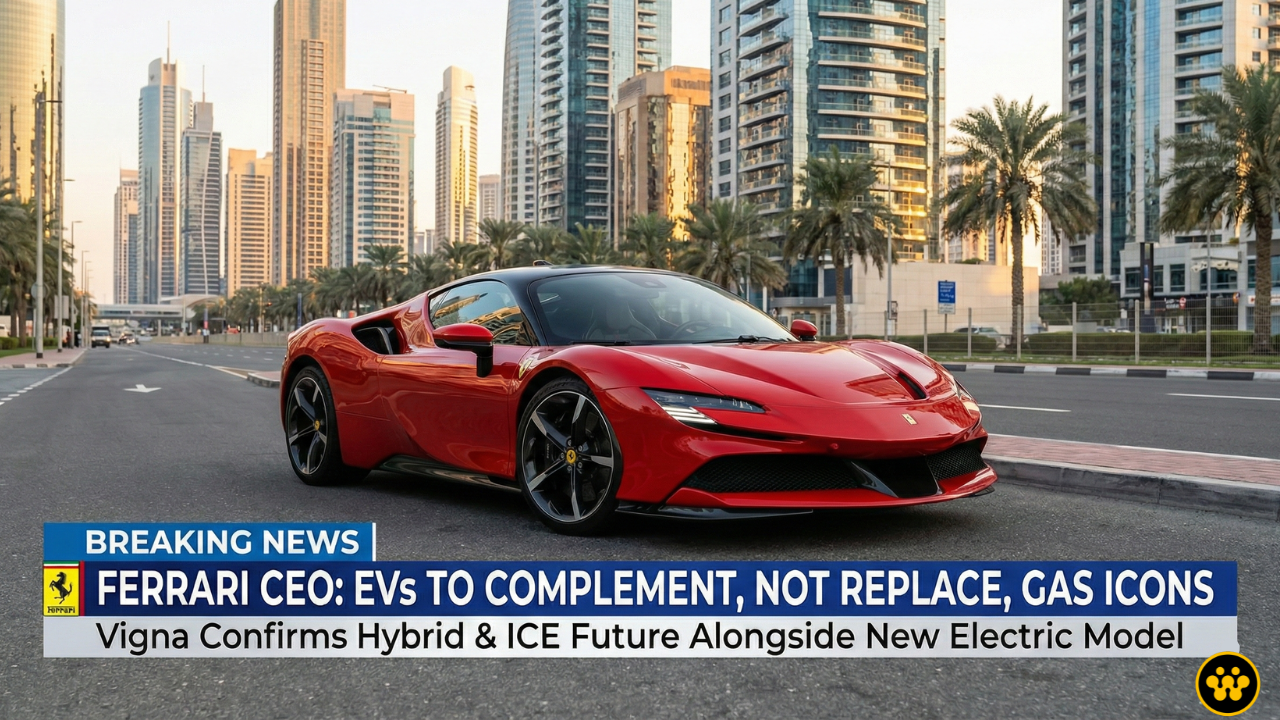
Despite the global automotive industry's rapid shift toward full electrification, Ferrari is taking a different road. In a recent statement, Ferrari CEO Benedetto Vigna clarified the Italian automaker's stance, confirming that their entry into the electric vehicle market is designed to complement—not replace—their legendary internal combustion engine (ICE) lineup.
Vigna’s comments come as a relief to purists fearing the extinction of the V12, signalling that the Prancing Horse intends to keep gas-powered supercars alive for as long as possible.
The "Electric Addition" Strategy
Speaking on the company's roadmap, Vigna emphasized that Ferrari is prioritizing "emotion-driven innovation" over regulation-driven timelines. He described the upcoming shift not as a transition, but as an "electric addition."
The goal is to maintain a "technology-neutral" portfolio. This means Ferrari will continue to offer three distinct powertrain options to clients:
-
Traditional Internal Combustion Engines (V6, V8, V12)
-
Hybrid Powertrains (like the 296 GTB and SF90)
-
Fully Electric Vehicles (starting in 2026)
"We are not transitioning only to electric cars," Vigna stated. "It will be the client selecting."
Overcoming EV Challenges: Weight and Emotion
One of the biggest hurdles for electric supercars is the lack of engagement and increased weight—factors Vigna openly acknowledged. He noted that while many EVs feel like "elephants" due to heavy battery packs, the upcoming Ferrari electric car will feel like a "prancing horse."
To achieve this, Ferrari is focusing on:
-
Weight Management: Keeping the vehicle under two tonnes using active systems to mask mass.
-
Sound Engineering: Developing patented sound signatures to ensure the car doesn't sound silent or artificial.
-
Torque Shift Engagement: Simulating the feeling of gear shifts to prevent the "flat" acceleration curve common in EVs.
The Future of ICE and E-Fuels
While the first full battery-electric Ferrari is confirmed for a 2026 debut, Vigna pushed back against the idea that EVs are the only path to sustainability.
The CEO highlighted the potential of carbon-neutral fuels (e-fuels). He believes that as innovation lowers the cost of e-fuels, they will become a viable solution for low-volume manufacturers like Ferrari. This would allow the brand to continue producing high-cylinder ICE vehicles that meet environmental regulations without sacrificing the visceral experience of a gas engine.
Key Takeaways: Ferrari’s 2025-2030 Outlook
-
No All-Electric Mandate: Ferrari will run ICE, Hybrid, and EV lines in parallel.
-
Release Date: The first fully electric Ferrari arrives in 2026.
-
Customer Choice: The strategy focuses on luxury and choice, not forcing buyers into one technology.
-
Sustainability: E-fuels are viewed as a key technology to keep combustion engines alive.
Frequently Asked Questions (FAQ)
Q: When is the first electric Ferrari coming out?
A: Ferrari has confirmed that its first fully electric vehicle will make its global debut in 2026.
Q: Will Ferrari stop making gas cars?
A: No. CEO Benedetto Vigna has stated that EVs will complement the existing lineup. Ferrari plans to continue producing internal combustion engines, potentially utilizing e-fuels to meet emission standards.
Q: Is the electric Ferrari going to be silent?
A: No. Ferrari is developing specific technology to ensure their EV has a distinct sound and "driving emotion," avoiding the silence typical of standard electric vehicles.
Looking to buy an EV?
Compare, explore and find the perfect electric vehicle for you.
Explore EVs