India vs. The World: The 2025 EV Report Card Is Out (And It’s Shocking)


Forget what you thought you knew about the global electric vehicle market. While the world keeps an eye on Tesla and marvels at German engineering, the real, gritty revolution is unfolding right here in our own backyard—and it proudly wears a "Made in India" tag.
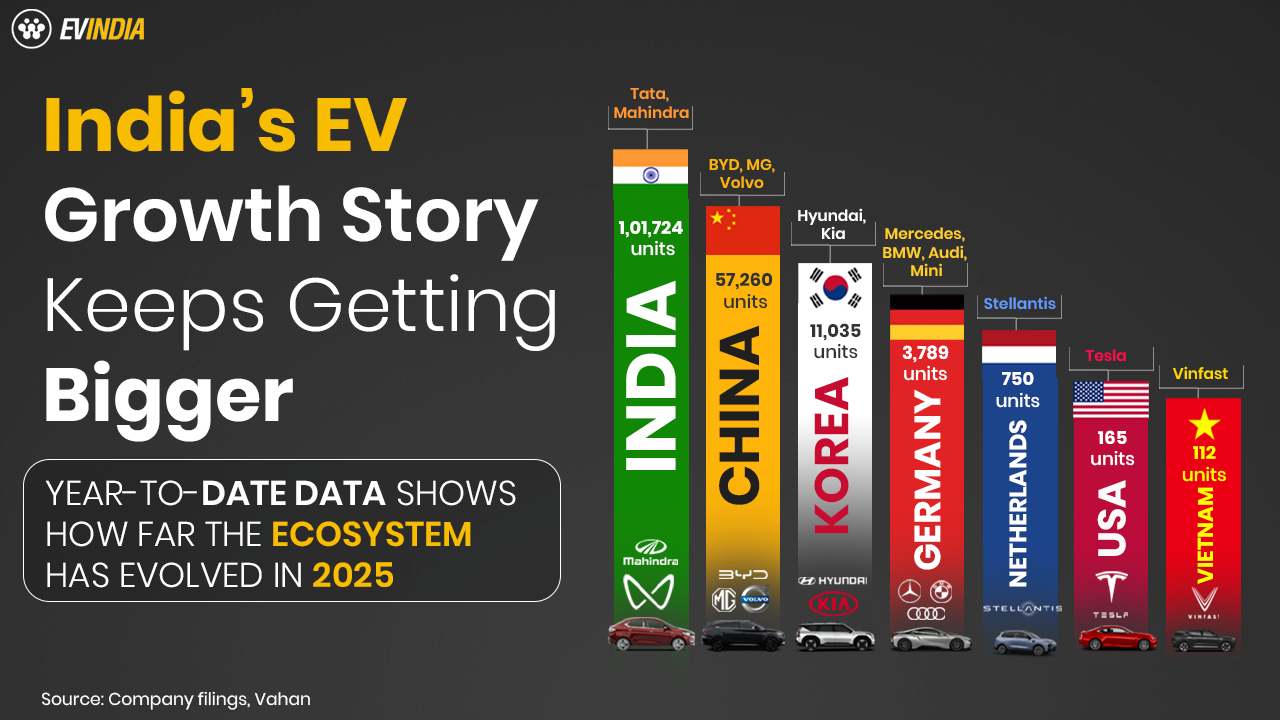
The numbers are in from November 2025, and they tell a stunning story: Our very own homegrown heroes, Tata and Mahindra, haven't just competed; they've dominated, surging past the massive 1,01,724 unit mark. This leaves the supposed global heavyweights eating their dust. Think about it: for every single Tesla sold in India this year, Tata and Mahindra collectively moved over 600 vehicles!
So, why is the world's third-largest auto market turning its back on these international giants and embracing local champions? It's far more than just price; it's about a deep, practical understanding of what an EV truly needs to conquer the diverse and demanding Indian road.
The Scorecard: David Slays Goliath in 2025 EV Race
A quick glance at the latest sales figures isn't just data; it's a visual testament to how uniquely the Indian EV market operates. Our rules, our game, our victory.
| Region/Brand Focus | Key Players | Units Sold YTD (Nov 2025) | Key Insight |
| INDIA (Homegrown Heroes) | Tata Motors, Mahindra | 1,01,724 | Clear Market Leaders. Strong localized strategy. |
| CHINA (Primary Challengers) | MG, BYD, Volvo | 57,260 | Significant competition, but still lagging far behind India. |
| GERMANY (Luxury Segment) | Mercedes, BMW, Audi | 3,700 | Niche appeal, high price point limits mass adoption. |
| USA | Tesla | 165 | Minimal presence, struggling to gain traction. |
| NETHERLANDS (Stellantis) | Stellantis (Jeep, Citroën) | 750 | Very limited impact, slow entry. |
| VIETNAM | Vinfast | 112 | Extremely low volume, nascent market presence. |
Data Source: Company filings, Vahan (as of Nov 2025). Note: some figures are approximate and consolidated.
The Unmistakable Takeaway: The Indian consumer has voted with their wallets. What they want isn't just a fancy badge; it's tangible value, unwavering durability, and a trustworthy service network.
Ready to explore the champions? Dive into our comprehensive guide on [India's EV Revolution].
Beyond the Sticker Price: Why Homegrown EVs Are King
It’s tempting to boil it all down to cost, but that's a disservice to the sophisticated engineering and strategic thinking behind our local successes. The true reasons are rooted deeply in the unique demands of the Indian landscape.
1. Built for Our Roads: The Ground Clearance Advantage Let’s be honest, Indian roads are an adventure. Speed bumps can be mountains, and potholes can be canyons. Global EVs, often designed for smoother European or American highways, struggle. Try navigating a Tesla Model 3 or a Hyundai Ioniq 5 over our typical urban obstacles. You’ll quickly find their low ground clearance a major liability. Our homegrown champions, like the Tata Nexon.ev and the upcoming Mahindra XUV.e9, are engineered with generous ground clearances (often 190mm+), ensuring their battery packs stay safe and sound. It’s practical design for real-world conditions.
2. The Sweet Spot Strategy: Affordability Meets Quality While luxury EVs certainly have their niche, the pulse of the Indian auto market beats loudest in the ₹10 Lakh to ₹15 Lakh segment. This is where Indian manufacturers have played their cards brilliantly. They're not just offering "cheap" EVs; they're delivering compelling packages like the Tata Punch.ev and the refreshed [ Mahindra XUV400] that hit this sweet spot perfectly, offering substantial range, features, and safety without breaking the bank. Global brands? Their entry point often begins where our mid-range offerings top out.
3. The Unsung Hero: Service & Support Network Imagine your EV needs servicing in a smaller town. If you own a premium foreign brand, you might be looking at a long tow to a metro city. With Tata or Mahindra, their decades-old, sprawling service networks mean support is often just around the corner. This accessibility and peace of mind are invaluable to Indian buyers, making the leap to electric far less daunting.
What’s On the Horizon: December's Game-Changers
If you thought 2025 was dynamic, buckle up for the next few months. The market is poised for another seismic shift with two major players ready to shake things up:
-
Maruti Joins the Fray: Mark your calendars for December 2nd. Maruti Suzuki is set to unveil its highly anticipated Maruti e-Vitara. Given Maruti’s legendary reputation for reliability, widespread service, and strong resale value, its entry is expected to woo a massive segment of conservative buyers who have been patiently waiting for a trusted name to go electric.
-
Mahindra’s "Born Electric" Revolution: Hot on Maruti’s heels, Mahindra’s BE.6e (from their "Born Electric" line-up) is slated for an early 2026 launch. With its futuristic design, robust platform, and confirmed high ground clearance, it’s looking to challenge the premium segments currently dominated by the Asian challengers.
Don't miss a beat on these exciting developments! Get all the latest news and insights delivered straight to your inbox by subscribing below
The Verdict: India's EV Identity
The 2025 EV report card isn't just about sales numbers; it’s a powerful statement. It confirms that India isn't merely adopting global EV trends; we are actively shaping what an electric vehicle should be for our unique conditions. We’re building EVs that are tough, smart, and accessible.
While the Teslas and German luxury brands strategize their next moves for the Indian market, Tata and Mahindra are already out there, quietly, confidently, building the electrified future—one lakh units, and countless satisfied customers, at a time.
Looking to buy an EV?
Compare, explore and find the perfect electric vehicle for you.
Explore EVs