Monsoon Safety Guide for Electric Vehicles: Everything You Need to Know


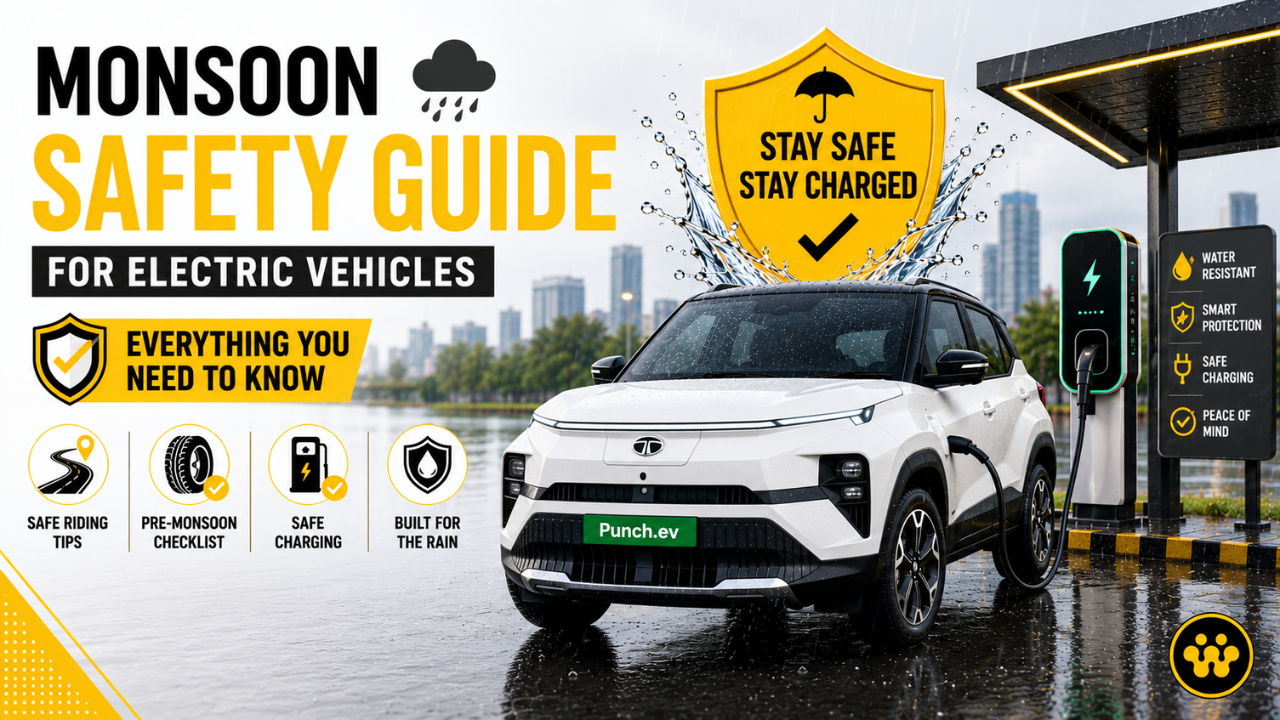
The Indian monsoon season is a time of lush transformation, turning our cityscapes into vibrant, rain-washed landscapes. But for the growing community of electric vehicle (EV) owners, the heavy downpour brings a unique set of questions. Is it safe to drive through waterlogged streets? How should I handle charging when it’s storming? Are my tires ready for slick asphalt?
Modern electric vehicles are engineering marvels. With advanced Ingress Protection (IP67) ratings and sophisticated electrical monitoring systems, they are built to endure the elements. However, "water-resistant" does not mean "invincible." As an EV owner, your proactive approach—blending technical knowledge with cautious riding habits—is the difference between a seamless commute and a breakdown.
In this guide, we dive deep into the essential monsoon care protocols, providing a roadmap to ensure your EV stays safe, efficient, and road-ready throughout the wet season.
The "Mental Map" Approach: Scanning Your Route for Safety
Before you even turn the throttle or press the accelerator, you need to cultivate a defensive riding mindset. Experienced riders don't just react to the road; they anticipate it. We call this the "Mental Map."
Monsoon riding is not about speed; it is about spatial awareness. As you head out, you must constantly visualize the road surface ahead. You aren’t just looking for traffic; you are looking for hidden hazards.
1. Identifying the Hazards
-
The "Khadde" (Potholes): Rainwater often masks the depth of potholes. If you see a water-filled depression, treat it as a potential deep crater. Avoid it at all costs. If you must go through, slow down to a crawl before the patch and maintain steady momentum.
-
Gravel and Oil Patches: Rain lifts accumulated road grime, oil, and dust to the surface, creating a "grease" layer that is incredibly slippery. Scan for oil sheen on the road—this is the most dangerous surface for a two-wheeler or car.
-
Waterlogging Spots: Every city has "usual suspects"—areas that flood every year. Keep a mental list of these locations and plan your route to avoid them entirely. If you see a stalled vehicle ahead in a waterlogged area, do not assume you can make it through; turn back.
2. The Golden Rule: Speed Management
Tire slip is the primary cause of monsoon accidents. EVs provide instant torque, which is fantastic for acceleration but can be treacherous on wet surfaces.
-
Slow Down: Reduce your top speed by 20-30% during heavy rain.
-
Smooth Inputs: Avoid "whiskey throttle" or harsh braking. Apply power gradually to ensure your tires maintain grip. If your EV has a "Rain Mode" or "Eco Mode," enable it. These modes often soften the initial torque delivery, providing better traction control.
Pre-Monsoon Maintenance: The Non-Negotiable Checklist
You cannot wait for the rain to start before you realize your vehicle is unprepared. Use this pre-monsoon checklist to ensure your EV is in peak condition.
1. Tires: Your Only Point of Contact
Tires are the most critical component for safety.
-
Tread Depth: Ensure your tread depth is at least 2mm. Shallow treads cannot channel water away, leading to hydroplaning (where the tire loses contact with the road and slides on a thin layer of water).
-
Tire Pressure: Maintain the manufacturer-recommended pressure. Under-inflated tires have a larger contact patch but poorer water-channeling capability.
2. Brakes: The Safety Net
Rain and road grit can degrade brake performance.
-
The Feel Test: If your brakes feel "spongy" or make a grinding noise, get them checked immediately.
-
Cleaning: Use a mild water rinse to remove mud from your brake rotors and calipers. Never use high-pressure washers directly on the electrical components or motor area.
3. Lights and Visibility
Visibility is severely reduced during monsoon.
-
Check Every Bulb: Test your headlights, tail lights, and, most importantly, your indicators.
-
Upgrade if Needed: If your current lights feel dim, consider high-quality, weather-resistant LED upgrades. Being seen is as important as seeing the road.
4. Battery Health
-
The Inspection: Check your battery housing for any physical damage or loose seals. Even the best-engineered EV needs an intact seal to remain waterproof. If you notice any warning lights or error codes on your dashboard, do not ignore them. Take your vehicle to an authorized service center immediately.
Charging Safely: Best Practices in Wet Weather
One of the most persistent myths in the EV community is that you cannot charge in the rain. Modern charging infrastructure and vehicle onboard systems are designed with layers of protection to prevent electrical faults.
Essential Charging Habits:
-
Seek Covered Infrastructure: Whenever possible, choose a charging station that provides overhead shelter.
-
Inspect Cables: Before plugging in, take five seconds to inspect the charging cable. If you see cuts, exposed wires, or heavy fraying, do not use it.
-
The "Connector-Down" Technique: When connecting your charger, ensure the cable has a slight downward curve before entering the port. This prevents water from running down the cable and entering the charging socket.
-
Wait for Dryness: If your charging port was exposed to heavy rain, wipe the area with a microfiber cloth before inserting the connector.
-
Use Certified Chargers: Never use makeshift or unauthorized charging adapters. Modern chargers (especially public fast chargers) have built-in "handshake" protocols and automatic shutoff mechanisms that kill power the millisecond a fault or moisture ingress is detected.
Understanding the Engineering: Why Your EV is Protected
It is important to understand that your vehicle is not fragile. Manufacturers conduct rigorous testing for water exposure, including:
-
IP67/IP68 Ratings: This indicates the battery and motor are protected against dust and temporary immersion in water.
-
Automatic Isolation: In the event of a severe fault, modern EVs are equipped with an "isolation monitor." Similar to an ELCB (Earth Leakage Circuit Breaker) in your home, the vehicle’s electrical system can detect a short and instantly isolate the high-voltage circuit, preventing any safety hazard.
However, remember: These systems are fail-safes, not invitations to drive through deep floods. Extreme flooding that reaches above the floorboard of a car or the floorboard/motor hub of a scooter can still cause damage to ancillary components like suspension, wheel bearings, and interior electronics.
Post-Ride Care: Keeping Your EV Pristine
The work isn't done when you park. Prolonged exposure to moisture, mud, and road salt can cause corrosion.
-
Dry It Off: If your vehicle was parked outside during a downpour, give it a quick wipe-down, specifically focusing on the charging port, door seals, and display console.
-
Avoid High-Pressure Jets: Do not use high-pressure water cannons directly on the motor, charging port, or electrical junction boxes. A bucket of water and a soft sponge are safer and more effective.
-
Routine Maintenance: Do not attempt to repair electrical issues yourself. If you face a persistent problem, trust certified technicians who understand the specific architecture of your EV.
Final Thoughts for the EV Community
Driving an EV in the monsoon doesn't have to be a source of anxiety. With a bit of planning—building your "mental map" of hazards, maintaining your tires, and charging responsibly—you can enjoy the rainy season with confidence.
As we continue to push the boundaries of electric mobility in India, remember that the most advanced safety feature in your car or scooter is you. Stay slow, stay alert, and keep your EV healthy.
Frequently Asked Questions
Q.1Is it safe to drive an electric vehicle in heavy rain?
Q.2Can I charge my electric vehicle during the rain?
Q.3Can rain damage an electric vehicle battery?
Q.4What should I do if my electric vehicle goes through floodwater?
Q.5Are electric scooters waterproof for monsoon riding?
Q.6What maintenance should I perform on my EV during the monsoon?
Q.7Can an electric vehicle give an electric shock in the rain?
Q.8Is it safe to park an electric vehicle outside during rain?
Q.9How deep water can an electric vehicle safely drive through?
Q.10What are the best monsoon safety tips for electric vehicle owners?
Looking to buy an EV?
Compare, explore and find the perfect electric vehicle for you.
Explore EVs