Tata Tigor EV Clocks 2.26 Lakh Km with Zero Battery Degradation: A Real-World Milestone


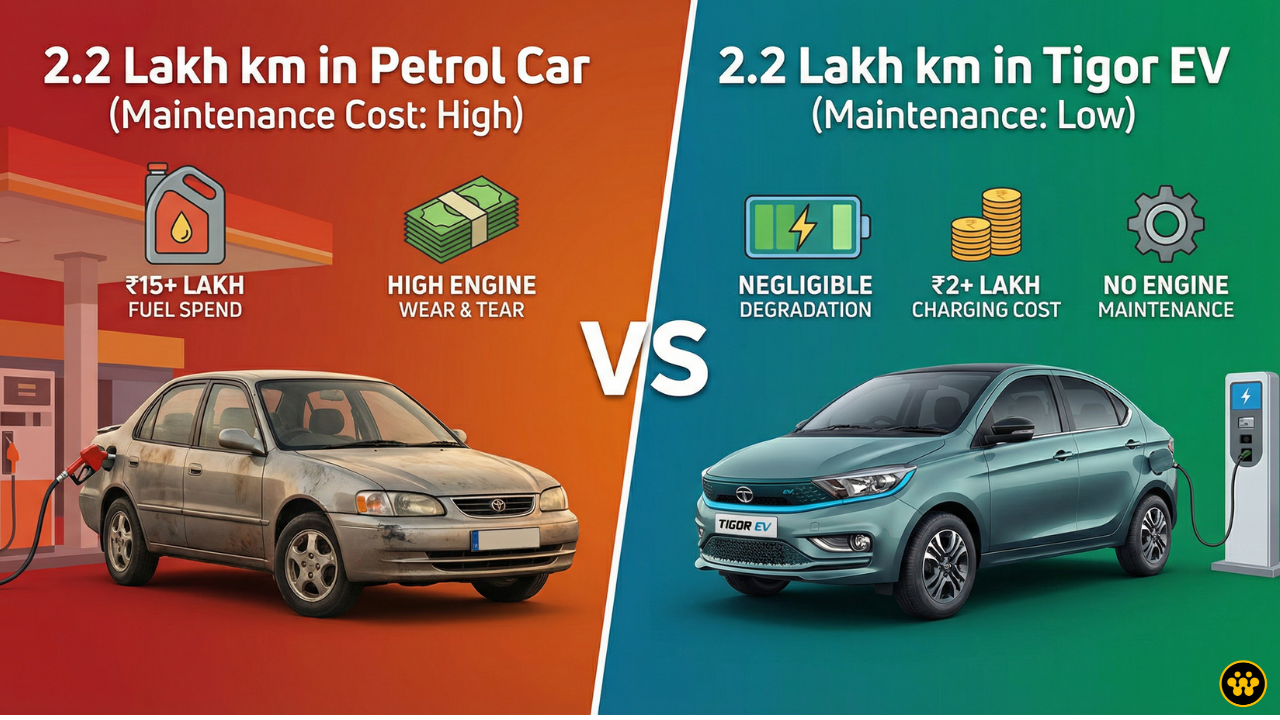
In a significant development for the Indian electric vehicle sector, a Tata Tigor EV owner from Gurgaon has set a new benchmark for battery durability. The owner, identified as Akbar, has covered an impressive 2,26,403 km in just three years, reporting almost zero noticeable battery degradation.
This real-world ownership experience debunks common myths regarding EV battery life and range anxiety, particularly for vehicles subjected to heavy commercial usage.
Key Ownership Highlights
-
Vehicle Model : Tata Tigor EV (25 kWh Battery Variant).
-
Total Distance : 2,26,403 km.
-
Ownership Period : 3 Years.
-
Location : Gurgaon/Delhi NCR.
-
Usage : Commercial (Cab Driver).
Real-World Range and Battery Health
According to the report, the vehicle continues to deliver a consistent performance comparable to when it was new.
-
Current Range : Approximately 200 km per charge (with AC on).
-
Range Fluctuation : Minimal variation of ±10–20 km depending on driving style and AC usage.
-
Battery Status : The owner reports no significant loss in range, defying fears that EV batteries degrade drastically after 1-2 lakh kilometers.
Fast Charging Myths Busted
One of the most critical takeaways from this story is the owner’s charging habits. Akbar works as a cab driver stationed at the Google Gurgaon office, where he utilizes the office charging infrastructure.
-
Charging Method : Frequent use of Fast Charging.
-
Charging Time : 1 to 1.25 hours for a full charge.
-
Impact : Despite frequent fast charging—often cited as a cause for faster battery wear—the vehicle’s battery chemistry and thermal management have held up without performance drops.
Running Costs and Economics
The owner highlighted the massive economic advantage of operating the Tigor EV compared to internal combustion engines.
-
Cost Per Charge : Roughly ₹180.
-
Earnings Per Charge : The owner estimates earning approximately ₹1,800 per charge cycle through rides.
-
Maintenance : The report states maintenance has been minimal, with no major failures recorded despite the high mileage.
Conclusion
This case study of a Tata Tigor EV crossing 2.26 lakh km serves as a testament to the reliability of modern electric powertrains. For prospective buyers concerned about the long-term durability of Tata EVs, this example confirms that with responsible usage, battery degradation is minimal even under harsh commercial operating conditions.
Looking to buy an EV?
Compare, explore and find the perfect electric vehicle for you.
Explore EVs