Tata Motors Shifts Gears: Upcoming Avinya Premium EVs to Use Chery-JLR Freelander Platform


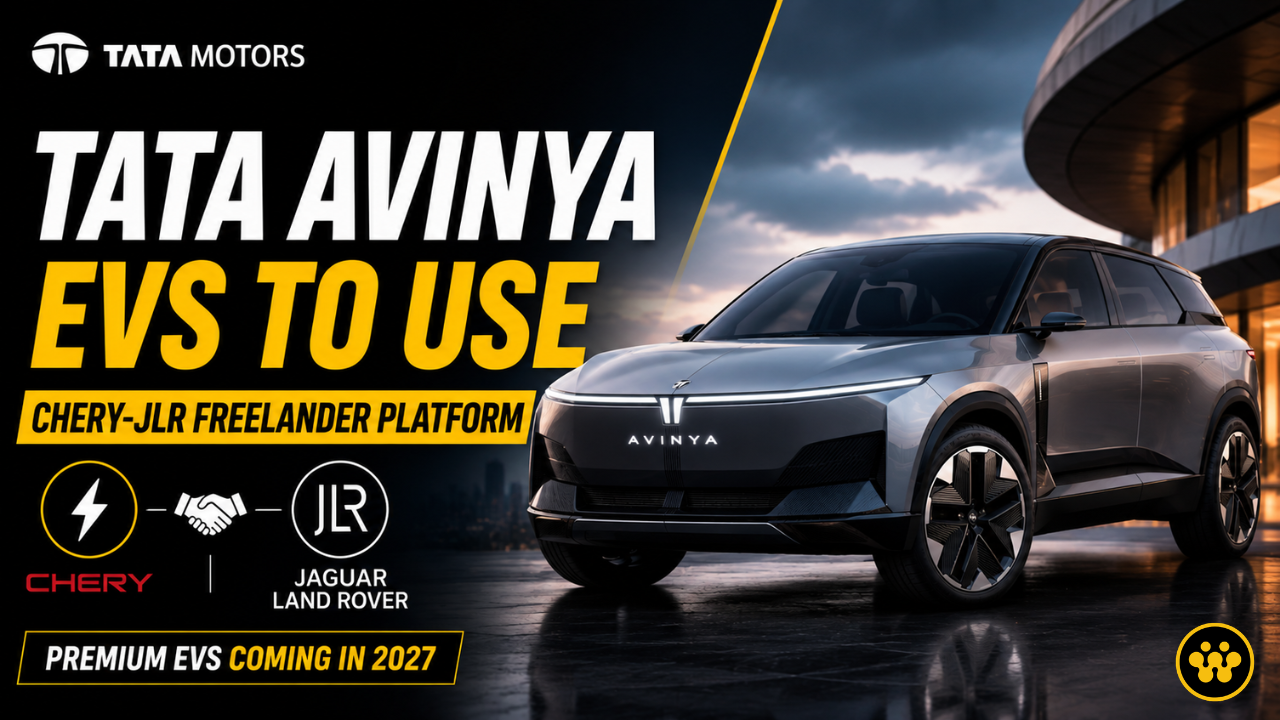
In a major strategic pivot, India’s leading electric carmaker, Tata Motors, has overhauled the technology roadmap for its upcoming premium electric vehicle (EV) brand, Avinya. Moving away from its initial plans to utilize Jaguar Land Rover’s (JLR) Electrified Modular Architecture (EMA), Tata Motors will now leverage a platform sourced from the Chery-Jaguar Land Rover (CJLR) ecosystem in China.
The first production model under this revised roadmap expected to be the Avinya X SUV is officially slated for a market launch in 2027.
Why Tata Swapped JLR’s EMA Architecture for Chery’s Technology
Tata Motors originally announced in 2023 that its highly anticipated, born electric Avinya lineup would borrow JLR’s luxury EMA architecture. However, adapting that platform for Tata's target price point and production volumes in India became commercially unviable.
By switching to the Freelander EV platform co-developed by Chery Automobile and JLR Tata Motors can fast-track development timelines that have faced rolling delays over the last two years.
Industry Insight: China's electric vehicle ecosystem currently leads the global industry in component cost-efficiency, software integration, and battery supply chain scale. Tapping into a pre-engineered platform minimizes heavy R&D risks and brings advanced EV technology to market much faster.
High-Performance Capabilities of the Freelander Platform
The move to the CJLR Freelander architecture introduces highly competitive, next-generation performance specifications to the Avinya lineup:
-
800-Volt Architecture: Built natively on Chery's E0X platform, the architecture supports ultra fast charging capabilities.
-
Ultra-Fast Charging: The platform supports a peak charge rate of 6C and can handle up to 350 kW of DC fast-charging.
-
Powertrain Flexibility: While Tata Motors is utilizing it for pure battery electric vehicles (BEVs), the platform is versatile enough to support plug-in hybrid (PHEV) and range-extender powertrains.
-
Size and Scale: The platform easily accommodates premium SUVs measuring over five meters in length, allowing Tata to plan a future three-row premium electric SUV alongside the Avinya X.
Reworked for India: Manufacturing and Localisation Plans
To ensure the vehicles retain a distinct brand identity, Tata Motors isn't just rebadging a Chinese vehicle. Teams from Tata Technologies, alongside engineers in India, the UK, and China, are heavily modifying the vehicle electronics, software systems, ADAS calibration, and thermal management specifically for Indian driving conditions.
|
Feature / Detail |
Specification |
|
First Model Launch |
2027 (Expected World Premiere at Auto Expo) |
|
Target Battery Size |
65 kWh to 80 kWh packs (estimated) |
|
Initial Manufacturing |
Semi-Knocked Down (SKD) kits imported from China |
|
Assembly Plant |
TMPV-JLR facility in Panapakkam, Tamil Nadu |
|
Retail Strategy |
Independent premium showroom network (separate from standard Tata dealerships) |
While the initial batch of Avinya EVs will land in India as component kits for local assembly, Tata plans to step up localization within the Chennai-Ranipet industrial ecosystem as production scales up toward a second EV launch slated for 2029.
The Competitive Road Ahead
Electric vehicles currently account for roughly 14% of Tata Motors' total passenger vehicle sales, with the brand aiming for 30% by 2030. As competitors like Mahindra & Mahindra and JSW MG Motor ramp up their luxury and mass market EV offerings, the Chery-JLR platform deal gives Tata a vital stop-gap arrangement to protect its market leadership while continuing to develop its own proprietary, long-term EV architecture.
Frequently Asked Questions
Q.1
Looking to buy an EV?
Compare, explore and find the perfect electric vehicle for you.
Explore EVs