Ola Electric Secures ARAI Approval for New Commercial Electric Scooter Targeted at Gig Workers


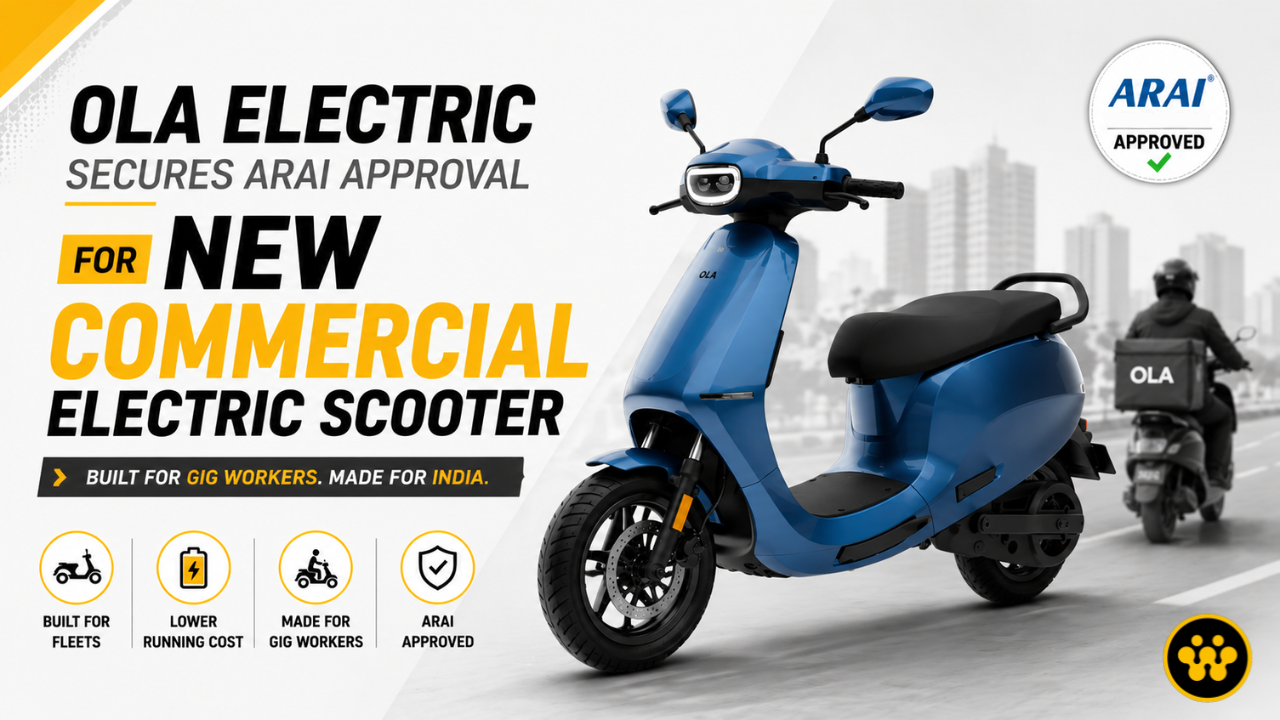
In a strategic move to capture India's rapidly expanding B2B and fleet delivery markets, Ola Electric has secured crucial regulatory approval for a brand-new commercial electric scooter. According to official government certification documents, the country’s leading EV manufacturer is preparing to enter the high-utilization commercial EV two-wheeler segment, with an official market launch expected as early as this quarter.
The official homologation certificate was granted by the Automotive Research Association of India (ARAI) under the Central Motor Vehicle Rules (CMVR). Since homologation represents one of the final regulatory hurdles in the automotive manufacturing pipeline, industry insiders suggest that a commercial rollout is imminent.
Ola S1 Platform Adapted for Fleet Operations
The certification documents reveal that the new Ola Electric commercial electric scooter is built upon the company’s proven, high-volume Ola S1 platform. However, the vehicle has been structurally and technically optimized for heavy-duty commercial use cases, such as quick-commerce logistics, food delivery networks, and urban freight fleets.
Key technical specifications revealed in the homologation documents include:
-
Vehicle Category : L1-category electric scooter
-
Powertrain : 4-kilowatt (kW) electric motor
-
Performance : Rated top speed of approximately 70 km/h
Unlike customer-centric models that prioritize premium smart features, this commercial variant is engineered to maximize operating economics, battery range, and daily fleet utilization. The configuration points toward an affordable, ruggedized design tailored to lower the total cost of ownership (TCO) for delivery riders.
Capitalizing on Fuel Price Pressures and EV Mandates
Ola Electric’s expansion into the commercial B2B space comes at a critical time for India's logistics sector. Skyrocketing petrol prices, driven by ongoing global supply chain disruptions and geopolitical tensions around the Strait of Hormuz, have heavily squeezed the daily earnings of gig workers reliant on internal combustion engine (ICE) two-wheelers.
Furthermore, regional regulatory shifts are accelerating the institutional transition toward green mobility. Policies like the Delhi EV Policy 2.0 and upcoming municipal frameworks are aggressively targeting delivery companies, with proposals aimed at phasing out new ICE two-wheeler registrations for commercial fleets within a tight timeline.
Industry analysts view the delivery and last-mile logistics segment as a major volume driver for EV OEMs. Because commercial delivery vehicles experience much higher daily utilization and faster replacement cycles than personal commuter vehicles, securing early dominance in this sector offers a lucrative, long-term revenue pipeline.
Launch Timeline and Executive Hints
While Ola Electric has not released an official statement regarding the technical homologation or specific pricing models, Ola Electric founder and Chairman Bhavish Aggarwal recently hinted at the company's focus on this demographic. In a recent post on X (formerly Twitter), Aggarwal highlighted the surging interest among gig workers turning toward electric mobility to mitigate crushing fuel costs.
Should the product debut this quarter, Ola Electric will enter direct competition with established commercial EV fleet suppliers and specialized two-wheeler startups, thereby fundamentally transforming India's last-mile logistics ecosystem.
Looking to buy an EV?
Compare, explore and find the perfect electric vehicle for you.
Explore EVs