India’s EV Localisation Roadmap: Progress, Potential, and Key Challenges for 2030


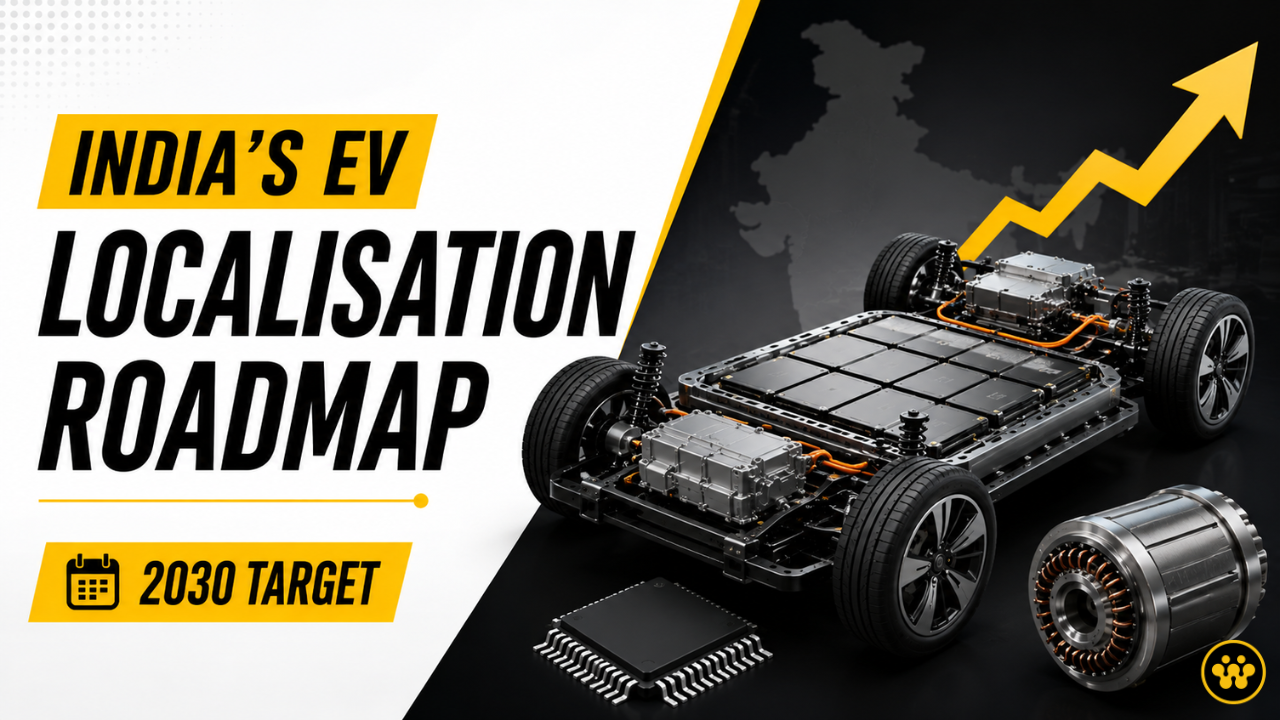
India is making significant strides toward becoming a global hub for electric vehicle (EV) manufacturing. According to a comprehensive new report from the Institute for Energy Economics and Financial Analysis (IEEFA) and JMK Research & Analytics, the nation is on track to achieve 90–100% localisation across several high value EV component categories by 2030. However, achieving full supply chain resilience requires overcoming persistent challenges in the sourcing of semiconductors and rare earth magnets.
The Path to 2030: What is Localising?
The automotive sector has seen rapid progress in localising components that align with India’s traditional manufacturing strengths. Key areas currently gaining domestic momentum include:
-
Structural Components: Chassis and body parts.
-
Mechanical Systems: Advanced suspension and braking systems.
-
Wiring and Connectivity: Wiring harnesses and essential electrical distribution components.
The "Import Bottleneck": Why Semiconductors Matter
Despite the optimistic outlook, the report highlights a critical dependency on imported technology. Specifically, India continues to rely on global markets for:
-
Semiconductors (Chips): The "brains" behind EV traction motors and power electronics.
-
Rare-Earth Magnets: Essential for high efficiency electric motors.
Without domestic capacity in these areas, the industry faces limitations in "deeper" value creation, meaning that while the assembly is local, the high value technology often remains imported.
Policy Hurdles: The PLI Scheme Impact
The government’s Production-Linked Incentive (PLI) scheme was designed to accelerate this transition. However, the IEEFA and JMK report notes that by early 2026, less than 10% of the allocated ₹25,938 crore had been disbursed. Analysts suggest that accelerating the distribution of these incentives is vital to help manufacturers scale production and reduce the current reliance on external supply chains.
Conclusion
India’s roadmap to an electrified future is promising, but the next five years will be decisive. By focusing on semiconductor and magnet manufacturing, India can move from being an assembly led market to a technology led EV powerhouse.
Frequently Asked Questions
Q.1Can India achieve 100% EV component localisation by 2030?
Q.2What are the biggest hurdles to deeper EV localisation in India?
Q.3Why does India still import so many EV components?
Q.4How is the PLI scheme helping Indian EV manufacturing?
Q.5Which EV components are currently being localised in India?
Looking to buy an EV?
Compare, explore and find the perfect electric vehicle for you.
Explore EVs