Ather Energy Set to Disrupt EV Market with BaaS, Affordable Scooters & Massive Retail Expansion


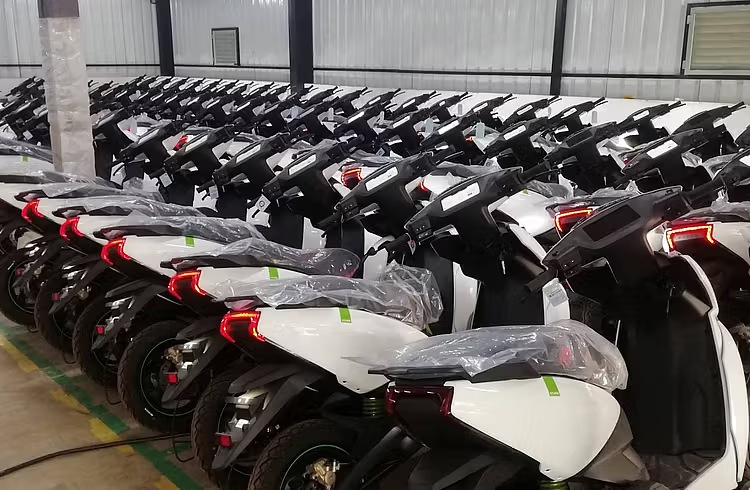
Bengaluru-based EV pioneer Ather Energy is gearing up to radically reshape the electric two-wheeler market in India. The company will soon introduce a Battery-as-a-Service (BaaS) model—an innovative subscription-based battery ownership approach that lowers upfront EV costs. Alongside this, Ather is also preparing to unveil a new affordable scooter platform dubbed the EL, as well as roll out a next-gen fast-charging technology.
These strategic shifts aim to help Ather tap into the high-volume, budget-conscious segment currently dominated by Ola Electric, TVS, and Bajaj.
Battery-as-a-Service (BaaS): Lowering EV Entry Barriers
Battery-as-a-Service (BaaS) decouples the battery from the vehicle’s purchase price, cutting costs by up to 30–40%. Under this model, customers pay either a subscription fee or a pay-per-kilometre rate for battery usage.
“We see strong market intent to adopt EVs, but upfront cost remains a barrier. BaaS can address this,” said Ravneet Phokela, Chief Business Officer at Ather.
While the official launch date hasn’t been disclosed, the model is expected to be announced within the coming weeks. Notably, Ather’s largest investor, Hero MotoCorp, will also debut BaaS for its upcoming Vida VX2 from July 1.
Expanding Retail Footprint: 750+ Stores by Year-End
Ather is set to double its retail network from around 350 to over 750 experience centres across India by December 2025. This includes:
· New entries into Tier-2 and Tier-3 towns.
· Greater outlet density in metros, where 50% of Ather’s sales are generated.
Each retail store will be paired with a service centre in a 1:1 ratio to ensure convenience and post-sales support.
New Affordable EL Platform & Fast Charging
Ather’s upcoming EL platform, engineered for cost-efficiency and versatility, will power the brand’s entry into the sub-₹1.2 lakh EV segment. This is a critical category where rivals like Ola’s S1X+, TVS’s iQube 2.2, and Bajaj’s Chetak Urban have cornered significant market share.
The new scooters will be showcased in August along with:
· Next-gen fast charging tech, promising quicker recharges.
· Ather Stack 7.0, the latest update to its software suite, enhances ride customisation, navigation, and smart features.
Market Context: FY25 Performance & Competitive Landscape
In FY25 so far (April–June), the electric 2W segment has grown 21% YoY to 1.15 million units. Market shares are currently:
· Ola Electric: 29.9% (3.44 lakh units)
· TVS Motor: 20.7% (2.38 lakh units)
· Bajaj Auto: 20.1% (2.31 lakh units)
· Ather Energy: 11.4% (1.31 lakh units)
While Ather’s volumes are strong, its market share has remained mostly flat due to its focus on premium models priced above ₹1.2 lakh, such as the Ather 450 series and Rizta.
Why This Matters: Ather’s New Growth Strategy
1. Affordability: BaaS and EL platform scooters lower cost of ownership, making Ather more competitive in the under-₹1.2 lakh segment.
2. Wider Access: Doubling retail stores boosts visibility and accessibility in North India and semi-urban markets.
3. Tech Edge: Continued focus on software and fast charging keeps Ather appealing to tech-savvy urban riders.
4. Premium Core + Budget Expansion: Ather is combining its “mass premium” appeal with entry-level accessibility to grow share.
Conclusion: Ather’s Next Chapter Begins
With Battery-as-a-Service, affordable scooters, and a massive retail footprint on the horizon, Ather Energy is no longer just a premium brand—it’s aiming to democratize EV access across India. In doing so, it’s ready to challenge the current market leaders not just in innovation, but also in volume.
Looking to buy an EV?
Compare, explore and find the perfect electric vehicle for you.
Explore EVs