Forget the EV Hype: India's Multi-Fuel Policy Is The Real Game-Changer for 2030


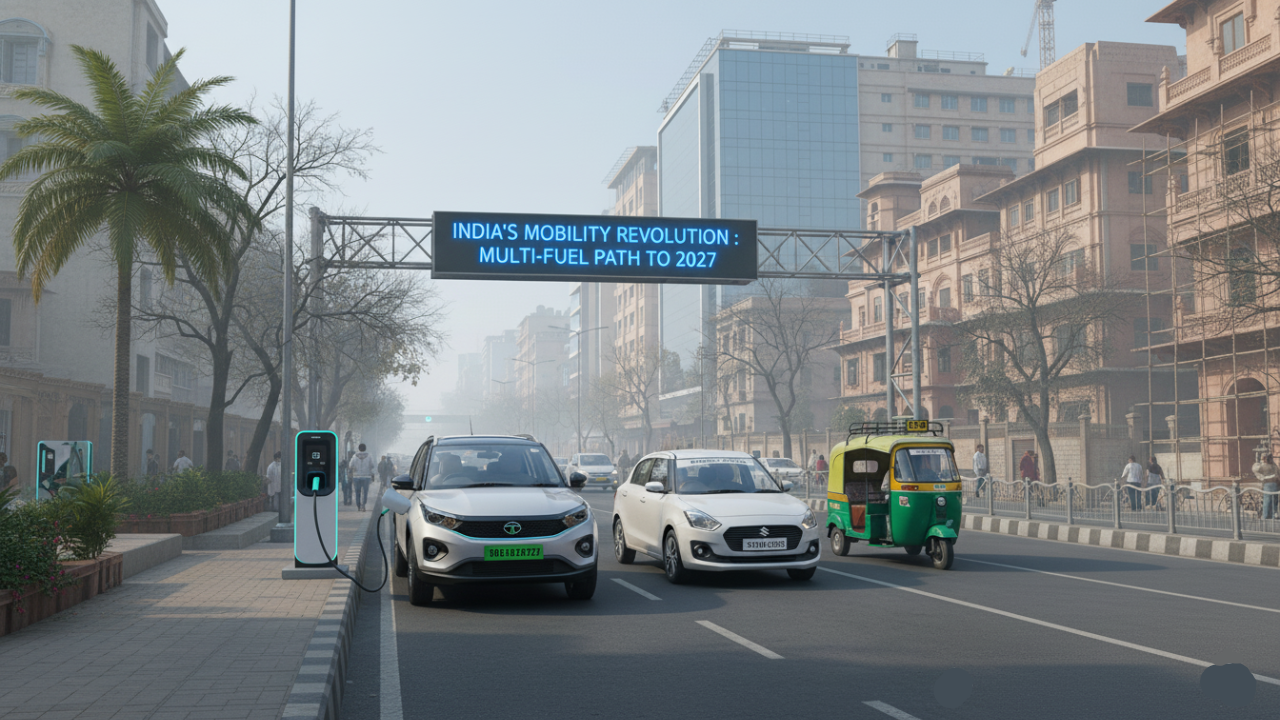
India stands at a pivotal juncture in its mobility history. As the world's fourth-largest automobile market, the transition toward sustainability is not just a climate imperative but an economic opportunity. While the hype around Electric Vehicles (EVs) dominates the conversation, a recent analysis from the India Energy Storage Alliance (IESA) reveals a more nuanced, and ultimately more resilient, strategic shift: The Multi-Fuel, Multi-Path Approach.
The IESA e-mobility report, "Automotive Electrification in India Market Report," confirms that the future of transport in India will not be a one-size-fits-all solution, but a complex, diversified ecosystem designed to achieve India’s ambitious Net Zero Goals.
Here is a deep dive into the key strategic pillars that will shape India’s EV adoption future over the next decade.
The Core Strategy: Why Multi-Fuel is the Future
The IESA report emphasizes that India is deliberately pursuing a technology-neutral policy. This is the key difference from many Western nations, which have focused almost exclusively on battery electric vehicles.
In India, the multi-fuel approach treats a diversified portfolio of alternatives—CNG, Hybrid, Flex-Fuel, and Hydrogen—not as competitors to EVs, but as crucial, necessary pieces of the Sustainable Mobility Ecosystem.
Why this strategy works:
-
Leveraging Existing Infrastructure :
It allows the gas distribution network (CNG) to remain a part of the solution, acting as a crucial bridge fuel in areas where charging infrastructure is still nascent.
-
Addressing Use-Case Diversity :
Different fuels suit different vehicles. While 2W/3W vehicles are ideal for pure battery electric power, Hydrogen trucking and CNG remain essential for heavy-duty and long-haul commercial fleets.
-
De-Risking the Transition :
By not placing all bets on battery technology, India hedges against future supply chain shocks or limitations in raw material availability.
The Regulatory Clock: CAFÉ 3 and the 2027 Deadline
Policy is often the most powerful accelerator, and the upcoming Corporate Average Fuel Efficiency (CAFÉ 3) draft norms represent a hard deadline that will redefine manufacturer strategy.
Effective April 1, 2027, these norms will introduce volume-based incentives for Original Equipment Manufacturers (OEMs) to drastically increase the sales of zero and low-emission vehicles.
The Impact on OEM Strategy:
-
Forced Product Lineup Shift :
Manufacturers can no longer rely solely on maximizing sales of internal combustion engine (ICE) vehicles. To comply with the tougher average fuel efficiency targets, they will be financially compelled to flood the market with alternative fuel and electric models.
-
Accelerated Investment :
The 2027 mandate will likely trigger a massive surge in investment in local supply chains, R&D for next-generation flex-fuel engines, and dedicated EV assembly lines well before the deadline.
-
Consumer Access:
As manufacturers race to meet quotas, the market will see a much wider variety of affordable EVs, hybrids, and flex-fuel vehicles, driving mass India EV adoption.
Decentralized Acceleration: The Rise of Regional Mobility Hubs
The transition to sustainable mobility is not homogenous. The IESA data shows that adoption remains significantly uneven, reflecting differing market maturity and local policies.
States like Uttar Pradesh, Maharashtra, Karnataka, and Tamil Nadu currently lead EV sales, accounting for over half of the national volumes. This regional dominance is a crucial insight into the future:
-
Learning Models :
These leading states are establishing blueprints for successful transition, leveraging State-Level EV Incentives to create dedicated Mobility Clusters that attract manufacturing and deployment investment.
-
Phased vs. Direct Adoption :
The report highlights that states with high levels of readiness are moving toward a direct Zero Emission Vehicle (ZEV) path, while others are pragmatically utilizing bridge fuels like CNG first.
This decentralized approach means that future investment will be heavily concentrated in these proven regional hubs, while the multi-path strategy provides an accessible entry point for all other states.
The Pragmatic Path to India’s Net Zero Goals
Ultimately, the multi-fuel strategy is a testament to India’s pragmatism in achieving its India Net Zero Goals. The nation understands that a single-solution approach is too slow for its scale and complexity.
By combining balanced demand-side incentives (subsidies for buyers) and supply-side interventions (mandates for manufacturers), India is ensuring that every step taken—whether it’s the purchase of a CNG vehicle, a hybrid, or a pure EV—is a step toward decarbonization.
The future of India's EV adoption is not just electric; it is a blend of technologies working in concert, making sustainability a tangible reality for every segment of the economy.
What's Your Take?
Do you believe India's diversified multi-fuel approach is smarter than other countries' singular focus on pure EVs? Which fuel—Electric, Hydrogen, or—do you think will be the biggest market mover by 2030?
👉 If you are confused about choosing the right Electric Vehicle from India's top brands, click here to talk with our EV Guru for personalized advice!
Looking to buy an EV?
Compare, explore and find the perfect electric vehicle for you.
Explore EVs