Maruti Suzuki's New Affordable Electric Hatchback Spotted Testing: What We Know So Far


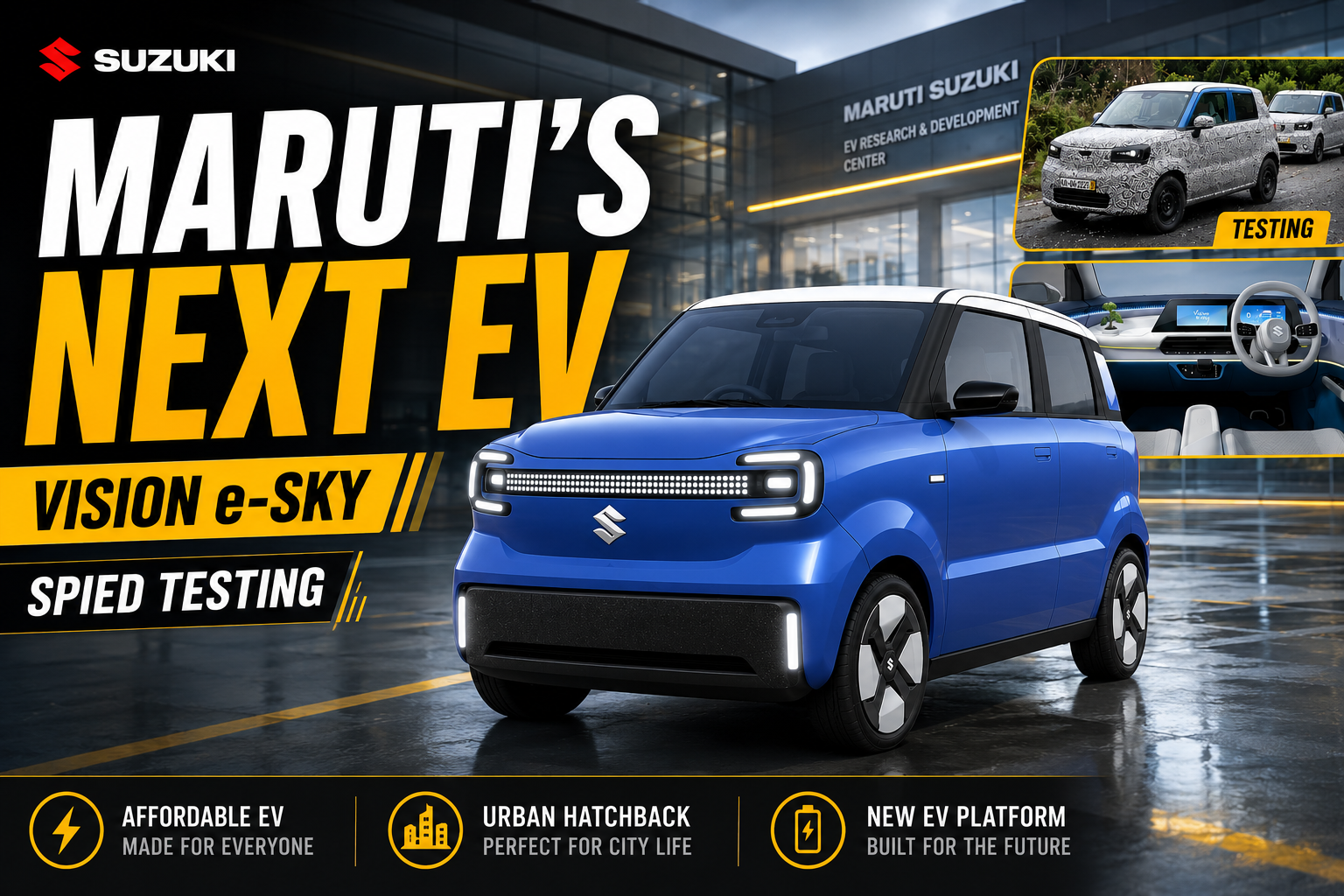
Suzuki previews the future of budget urban mobility with a tall-boy EV designed to take on market rivals.
The search for a truly budget-friendly compact electric hatchback is heating up. While electric SUVs get plenty of attention, daily city commuters need something small, efficient, and easy to park. Suzuki is stepping up to meet this demand. Recent spy shots reveal that Suzuki has officially begun road tests for a brand-new Maruti Suzuki affordable electric hatchback.
This production model draws heavy inspiration from the Suzuki Vision e-Sky concept first showcased at the Japan Mobility Show. Positioned as an accessible urban EV, this upcoming car could revolutionize mass-market electric mobility in India and global markets.
Quick Summary
The Maruti Suzuki Vision e-Sky is an upcoming affordable electric hatchback tailored for urban drivers. Built on Suzuki's specialized K-EV platform, it packages a 29 kWh battery pack with an estimated 270 km range into a compact 3.39-meter tall-boy body. Featuring dual digital screens, 4-door practicality, modern safety equipment, and aggressive local manufacturing, it is set to offer a compelling alternative to the Tata Tiago EV rival and MG Comet EV upon its Indian debut around 2026–2027.
Sharp Styling Meets Practical Tall-Boy Design
Suzuki designed the Vision e-Sky using its latest "Unique, Smart, Positive" design philosophy. The concept turned heads with a flat nose, short overhangs, matrix LED headlights, and a distinctive dual-tone white roof.
Recent road testing photos show that the production version tones down some of the extreme concept elements. However, it keeps the practical tall-boy silhouette.
Key Exterior Highlights
-
Compact Dimensions: Measuring 3,395 mm long, 1,475 mm wide, and 1,625 mm high, it fits snugly between the ultra-compact MG Comet EV and the slightly larger Tata Tiago EV.
-
Practical Changes: The futuristic camera mirrors and flush handles are swapped for standard side mirrors and conventional door handles for better cost management.
-
Aerodynamic Stance: The test mules feature closed-off front grilles and subtle bumper vents designed specifically for battery cooling.
Built on a Dedicated Platform: K-EV Architecture
Unlike older conversion models that shoehorn batteries into petrol-engine bodies, this entry-level EV uses Suzuki's newly developed Suzuki K-EV platform.
A dedicated platform offers massive benefits for city car buyers:
-
Maximum Interior Room: By pushing the wheels to the extreme corners, designers created a surprisingly spacious cabin despite the small exterior dimensions.
-
Better Weight Distribution: Placing the battery pack low beneath the floor improves handling and road stability.
Optimized Efficiency: Built specifically for electric powertrains, the structure cuts unnecessary weight to maximize driving distance.
Interior Features and Tech Expectations
Step inside, and you will find a cabin built around comfort and modern convenience. The concept highlighted a clean floating dashboard, wrapped seating, and integrated ambient lighting.
The upcoming production model is expected to bring premium electric vehicle features to a entry-level segment, including:
- Dual Digital Screens: A dedicated driver instrument cluster alongside an intuitive central touchscreen.
- Smart Driving Aids: Selectable drive modes, a 360-degree parking camera, and potentially an entry-level ADAS safety suite.
- Ergonomic Design: A "squircle" steering wheel with multi-function controls and a dash-mounted gear selector to save floor space.
Features and Specifications Table
| Attribute | Expected Specification / Detail |
| Model Name | Maruti Suzuki Vision e-Sky (Production Name TBA) |
| Vehicle Type | Electric City Hatchback / Electric Kei Car |
| Platform | Dedicated Suzuki K-EV Platform |
| Dimensions (L x W x H) | 3,395 mm x 1,475 mm x 1,625 mm |
| Battery Capacity | ~29 kWh Lithium-ion Pack |
| Claimed Range | ~270 km per full charge |
| Seating Capacity | 4 Passengers (4 Doors) |
| Infotainment & Controls | Dual digital screens, "Squircle" steering wheel |
| Lighting | Matrix-style LED headlamps, C-shaped DRLs, rear LED bar |
| Safety Equipment | 360-degree camera, ABS with EBD, Hill Assist, ADAS (Expected) |
| Primary Competitors | Tata Tiago.ev, MG Comet EV |
| Expected India Launch | FY2026 – 2027 |
Battery, Range, and Expected Performance
Range anxiety remains a big concern for first-time EV buyers. Fortunately, Suzuki plans to equip this hatchback with a competitive setup.
-
Battery Capacity: It is projected to carry a 29 kWh battery pack.
-
Claimed Range: Suzuki targets a real-world electric car range of around 270 km per charge.
This combination offers more than enough driving range for several days of urban commuting without requiring a daily recharge. Furthermore, Maruti Suzuki plans heavy local manufacturing in India, which will keep replacement parts affordable and vehicle prices low.
How It Compares to Key Rivals
When Maruti Suzuki launches this EV, it will enter a fiercely competitive market. Its main competitor will be the Tata Tiago EV rival segment.
| Feature / Spec | Upcoming Suzuki Vision e-Sky EV | Tata Tiago EV | MG Comet EV |
| Length | 3,395 mm | 3,769 mm | 2,974 mm |
| Platform | Dedicated K-EV Platform | Modified ICE Platform | Dedicated EV Platform |
| Battery Size | ~29 kWh (Expected) | 19.2 kWh / 24 kWh | 17.3 kWh |
| Claimed Range | ~270 km | 221 km – 293 km | 230 km |
| Target Segment | Urban City Hatchback | Sub-4m Hatchback | Ultra-Compact City Car |
Key Benefits for EV Buyers
-
Stress-Free City Parking: With a total length under 3.4 meters and a tight turning circle, squeezing into tight parallel spots or busy market lanes becomes effortless.
-
Unmatched Cost per Kilometer: Electric efficiency combined with home charging means running costs are a fraction of conventional petrol or diesel vehicles.
-
Maximum Interior Usability: The flat-floor skateboard architecture ensures zero wasted space, giving four adult passengers comfortable legroom and headroom.
-
Peace of Mind Ownership: Backed by Maruti Suzuki’s massive service footprint and high localization, long-term maintenance costs and spare parts availability will be best-in-class.
-
Future-Proof Tech: Standard digital displays, smart connectivity, fast-charging capability, and modern safety features ensure high resale value down the road.
Expected Price and Launch Timeline
Suzuki plans a phased rollout strategy for this global budget electric car.
-
Global Debut: The car will hit international markets first (including the UK and Japan) during FY 2026.
-
India Launch: The localized Maruti Suzuki version will likely follow in 2026–2027.
By prioritizing local manufacturing for batteries and structural components, Maruti aims to price this hatchback competitively. Expect estimated pricing to start around ₹7.5 Lakh to ₹9.5 Lakh (ex-showroom), positioning it right at the heart of the mass market.